Milbar Safety Wire Pliers: Still Available?
Short version: Milbar's iconic safety-wire twisters have been discontinued, and the remaining retail stock is selling out. Here is what happened, what made them the shop standard, and the safety-wire pliers actually worth buying today — from someone who safety-wired to the aircraft standard for over two decades.

- 3 picks compared
- Specs checked against maker data
- No paid placements
GaugeGrade is reader-supported. When you buy through links on our site we may earn an affiliate commission at no extra cost to you. We only recommend gear we have researched against verified manufacturer specifications.
- 1Discontinued: a retailer that carried them reports DiversiTech exited its OEM tools division in Q1 2025, taking the Milbar wire twisters with it — a restructuring decision, not a quality problem.
- 2Crawford Tool now shows both the classic 25W and 45W sold out, and milbar.com redirects to Imperial Tools. Aircraft Spruce still lists at least one Milbar model, so stock has not gone everywhere at once.
- 3Want that exact tool? Buy remaining stock while you can. Want a new one? See the three currently available picks below.
What we recommend
Compare the key specs side by side, then read the full notes on each pick below.
- Length
- 9in
- Reversible
- Yes
- Auto return
- Yes
- Length
- 9in
- Reversible
- Yes
- Auto return
- Yes
- Length
- 6in
- Reversible
- Yes
- Auto return
- Yes

American Aviator Reversible Safety Wire Pliers
Aviation and mechanics who want the Milbar feel from an actively stocked maker
- Length
- 9 in
- Reversible
- Yes
- Auto return
- Yes
- Reversible for clockwise or counter-clockwise twists
- Smooth spring (automatic) return lever
- Precision diagonal nose jaw
- Chrome-vanadium body with heat-treated cutting blades
- Priced above general-purpose tools
- This listing is the 9-inch size only
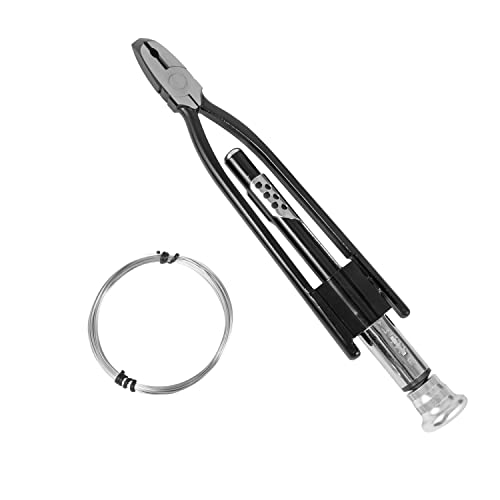
If you're replacing a Milbar, this is the tool retailers point you at: a 9-inch reversible twister with a locking diagonal nose jaw and heat-treated cutters, stocked by pilot supply houses. One of them describes American Aviator as the aviation line formerly sold as CruzTools.
It isn't a corporate successor to Milbar, and nothing about its origin, wire rating or warranty is published. What it does match is the thing that mattered: reversible action with an automatic return.
Based on the maker's specifications and manual and the published reviews linked below, not on our own test of this unit.
Setup, everyday use and what others found
Setup & use · per the maker
- Reversible: the same tool makes right-hand (clockwise) or left-hand twists, so one plier covers fasteners wired in either direction.
- Spring return, so the twist rod pulls back on its own between twists, and a jaw lock that holds the wire while you twist.
- Precision diagonal nose jaw that grips, twists and trims, with heat-treated cutting blades in a chrome-vanadium body.
- 9 inches tip to tip. This listing is the 9-inch reversible model only; a shorter 8.5-inch non-reversible SWP8 exists separately.
- Retailers describe American Aviator as the aviation line previously sold as CruzTools. We couldn't confirm that from the maker, because we found no American Aviator website.
- No wire-gauge rating, country of manufacture or warranty is published for this tool by anyone we could find.
What others found
We found no owner reviews of this model at the retailers carrying it, and no independent test of it. Forum advice about safety wire pliers is largely about avoiding the cheapest imports and doesn't name this tool.




OEMTOOLS 22662 9" Reversible Wire Twister Pliers
DIY, motorsport and shop users who want reversible, auto-return pliers without the aviation price
- Length
- 9 in
- Reversible
- Yes
- Auto return
- Yes
- Reversible for left and right twists, with a heavy-duty spring-loaded automatic return
- Locking jaws and a chromed retainer slide to stop the wire slipping mid-twist
- Mated cutters and tapered jaws; forged alloy steel, OEMTOOLS limited lifetime warranty
- The wire in the box is zinc-plated steel at about 0.020 in, not the 0.032 in stainless aircraft lockwire
- General-purpose: OEMTOOLS names aircraft as an application but publishes no standard or material grade
- 9-inch size is bulky for tight spots
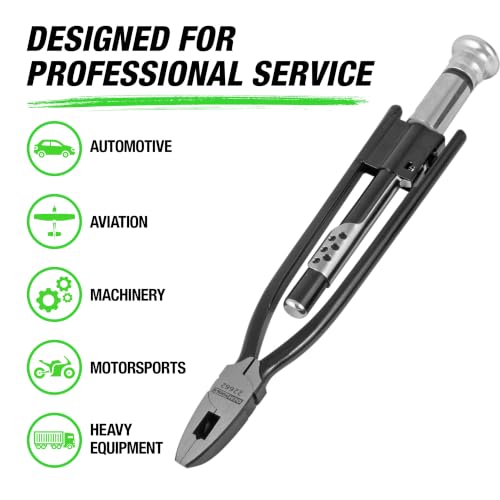
The value replacement, well under the aviation-branded price: reversible for both twist directions, a heavy spring return, locking jaws and mated cutters, from a Great Neck Saw brand in Memphis, Tennessee.
It's a general-purpose twister, not an aviation-specialist tool. OEMTOOLS names aircraft as an application but publishes no standard, steel grade or wire rating, and the wire in the box is zinc-plated rather than stainless.
Based on the maker's specifications and manual and the published reviews linked below, not on our own test of this unit.
Setup, everyday use and what others found
Setup & use · per the maker
- Reversible for right-hand or left-hand twists. OEMTOOLS states only that the twisting mechanism reverses; it doesn't describe how, so we can't tell you whether it's a sleeve, a collar or a switch.
- Heavy-duty spring-loaded automatic return with a chromed retainer slide, which OEMTOOLS says prevents the wire slipping while you twist. Locking jaws hold the wire.
- Tapered jaws for confined areas and mated cutter jaws: grip and twist, then squeeze to cut the wire.
- Forged alloy steel, per OEMTOOLS. That is the maker's own term, with no grade, heat treatment or hardness published behind it. 9 inches overall; the 22661 is the 6-inch version and the 22663 is both in one set.
- The wire in the box is about 10 m of 0.5 mm zinc-plated steel, per the listings that describe it. That is roughly 0.020 inch, against the 0.032 inch stainless of MS20995C32, the common aircraft size. Treat it as practice wire and buy lockwire separately.
- OEMTOOLS publishes a brand-wide limited lifetime warranty against defects in materials and workmanship, excluding misuse and repairs made outside its own facilities. It doesn't cover bits, blades, files, batteries or calibration.
What others found
OEMTOOLS markets the tool for "automotive, machinery and aircraft" applications in its own product copy, and the Amazon title goes further and calls them aviation pliers. No aviation standard, material specification or wire rating appears anywhere in the maker's documentation.
We found no independent test of this tool and no owner reviews outside the retail listings, which we haven't treated as owner feedback. The 10 m / 0.5 mm / zinc-plated figures for the included wire come from retailer listings rather than OEMTOOLS, which mentions the wire only in the product title.


WINTOWIN 6" Reversible Safety Wire Pliers Kit (with 50 ft wire)
The Milbar 25W's 6-inch size on a budget, with wire in the box
- Length
- 6 in
- Reversible
- Yes
- Auto return
- Yes
- 6-inch, reversible, with automatic spring return
- Includes 50 ft of .032" stainless safety wire
- Takes .012"–.032" wire
- Lesser-known brand
- Rated only to .032" wire, not .041"
The 6-inch size the Milbar 25W was known for, at the bottom of the market, and with a 50-foot spool of .032-inch wire in the box so you can start the same day.
The 25W was rated to about .041-inch wire; this one's listing stops at .032, and there's no maker documentation of any kind behind it.
Based on the maker's specifications and manual and the published reviews linked below, not on our own test of this unit.
Setup, everyday use and what others found
Setup & use · per the maker
- 6-inch reversible twister with an automatic spring-loaded return and tapered jaws, per the listing.
- Rated for 0.3–0.8 mm wire, which the listing gives as .012–.032 inch. The arithmetic is close: 0.8 mm is about .0315 inch, so .032 is rounded up.
- A 50-foot spool of wire, described as .032-inch 304 stainless, is in the box. Nothing we found confirms the grade, and the listing makes no MS20995 or NASM20995 claim.
- .032 inch is one of the two common safety-wire sizes for general hardware; the other, .041 inch, is above what this tool is rated for.
- The WINTOWIN trademark is registered to a Shanghai import and export company. There is no maker website, no stated country of manufacture and no warranty that we could find.
- Chrome-vanadium steel with a chrome finish, per the listing.
What others found
We found no owner reviews of this kit and no independent test of it. Nearly identical listings exist with 25-foot and 164-foot spools, which is the usual sign of a white-label product.
- Aeronautics diploma
- Engineering degree
- BAMEC (DGCA)
- QC-trained
- ~2 yrs tool management
Why you should trust us
SK Kutubuddin spent over two decades maintaining and inspecting aircraft and safety-wired to the aircraft standard throughout, so he knows exactly what a wire twister has to deliver on a flight-critical fastener. A former aviation professional with an engineering degree, a BAMEC, quality-control training and almost two years in a dedicated tool bay, he judges a Milbar replacement the way he judged any tool on the flight line: does it do the same job, the same way, every time?
The account of what happened to Milbar on this page sticks to what the record supports: the chain of ownership and DiversiTech's decision to exit its OEM tools division. The replacement picks were chosen by the features that made Milbar the standard, then each one's length, twist direction and return were checked against the manufacturer's specification and the current listing, in line with our How We Test method. We update the page as availability changes.
Who this is for
This page is for two kinds of reader. The first owns a Milbar, or learned on one, and wants to know whether it can still be bought or replaced like for like. The second has been told to buy a Milbar, found it out of stock or overpriced, and wants to know what to buy instead without settling for a plier that fights every twist.
Buying for a shop or school that shares tools? Availability matters more than the old badge: choose a replacement you can reorder, so every bench has the same tool.
- Mechanics replacing a worn, lost or broken Milbar twister
- Shops and training programs standardizing on a plier they can reorder
- Buyers weighing remaining Milbar stock against a new tool
- Motorsport and DIY users who were pointed to Milbar by name
How we picked
With the original out of production, we looked for currently available pliers that reproduce what made Milbar the shop default, at more than one price point.
- 01
The Milbar feature set
Reversible action was required for every pick, and automatic return was credited only where the maker or listing states it. Those two features, far more than the brand name, are what made the classic twisters quick and consistent to use.
- 02
Actively stocked
A replacement is only useful if you can buy it again next year. We favored makers that are currently producing and selling their pliers, and we kept dwindling old stock out of the picks while explaining above when it is still worth buying.
- 03
Aviation focus versus general purpose
We separated tools sold specifically for aviation work from general-purpose twisters and labeled the difference, so a hangar buyer and a weekend motorsport builder can each see which trade-off they are making before they spend anything.
- 04
Length options
The classic 25W was a 6-inch tool, so we included a 6-inch option for close work, alongside 9-inch picks for readers who want more reach and leverage on longer, heavier twists.
- 05
Verified details only
Each pick's length, twist direction and return mechanism were checked against the manufacturer's specification and the current listing. Where a feature could not be confirmed, the comparison table says so with a dash instead of an assumption.
What to know before you buy
What happened to Milbar
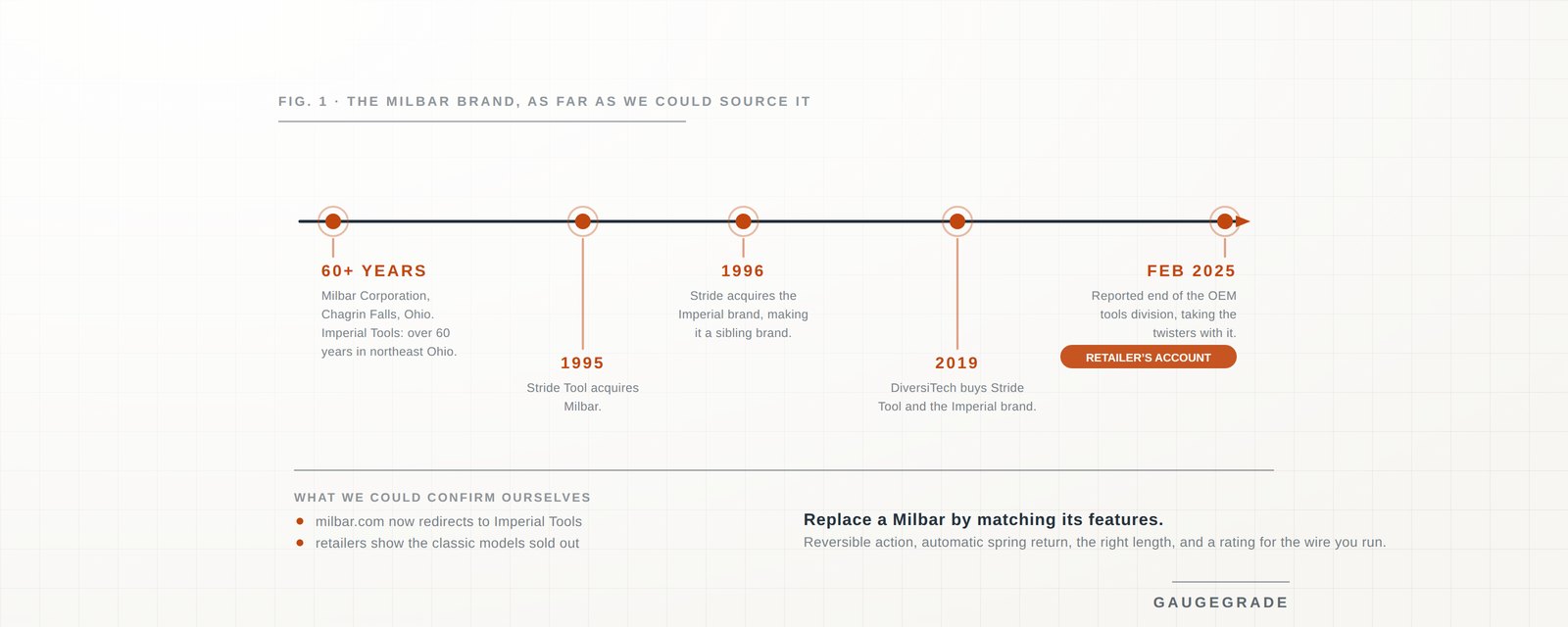
Milbar wire twisters were made for decades by the Milbar Corporation of Chagrin Falls, Ohio; Imperial Tools, which now holds the brand history, says they were designed and manufactured in northeast Ohio for over 60 years.
Stride Tool acquired Milbar in 1995 and the Imperial brand a year later, which made Imperial a sibling brand rather than a later owner. DiversiTech then bought Stride Tool and the Imperial brand in 2019.
The end of the line is reported by Pilots HQ, a retailer that carried them: it says DiversiTech announced in February 2025 that it would discontinue its OEM tools division at the end of that quarter, taking the Milbar twisters with it along with several other OEM tool lines. We could not find a DiversiTech announcement or trade coverage confirming it, so treat the detail as that retailer's account rather than an established fact. What we can confirm independently: milbar.com now redirects to Imperial Tools, and retailers are showing the classic models sold out.
What made Milbar twisters good (and what to match)
If you are replacing a Milbar, these are the features that made the classic 25W the shop default — and the ones worth insisting on in a replacement:
- Reversible action — the same tool makes clockwise or counter-clockwise twists.
- Automatic (spring) return — the twist rod retracts on its own, so you can work quickly.
- Cushion throat on the models that had it, such as the 25W — it catches the clipped wire end so it does not become FOD (foreign object debris).
- USA-made build and a diagonal cutting nose that trims the twist cleanly.
- The 25W was the 6-inch nominal size — about 8-3/4 inches overall — rated to about .041" wire.
How to choose a safety-wire plier
For almost everyone, a reversible, automatic-return plier in the right length is the correct buy. Match the tool to the work:
- Length: 6 inch for tight, general and bench work; 9 inch (or longer) for reach and longer, heavier twists.
- Reversible: essential if you safety-wire fasteners that must be secured in both directions.
- Automatic return: a real time-saver on repetitive runs.
- Jaw and cutter: a diagonal nose that grips, twists and cuts in one tool.
- Wire gauge: confirm the tool is rated for the wire you run (commonly .032" or .041" stainless).
The flight-line view
Safety wire is a flight-critical job: a fastener that can back out has to be positively locked, and the wire has to be tensioned and twisted so it pulls the fastener toward tightening. A good twister earns its keep by making that twist consistent and repeatable, run after run, so the finished job passes a pull test and an inspector's eye.
That is why the reversible, automatic-return design matters more than the badge on the handle. Milbar set the standard; the tools above carry it forward at a range of prices. If you find genuine Milbar stock and want it, buy it — but you are not giving anything up by fitting a current reversible, automatic-return plier instead. Our safety-wire plier roundup compares what is available now, and the technique guide covers the twist itself.
Buying remaining Milbar stock: what to check
If you want the original, new old stock and used tools still turn up. Buy from a seller who accepts returns, and because the name is so well known, make sure the photos show the Milbar marking on the tool itself rather than only in the listing title. Then check the tool before it goes anywhere near a fastener:
- The jaws close fully and the lock holds them shut under a firm pull on the wire.
- The spiral rod spins the head smoothly when you pull the knob, with no binding or rough spots.
- On an automatic-return model, the rod retracts fully and briskly on its own.
- If the model is reversible, both twist directions engage cleanly.
- The jaw teeth are not worn smooth or burred, which lets wire slip or nicks it.
- The cutter edges are free of chips and shear wire cleanly instead of crushing it.
Switching to a new twister
A new plier will not feel quite like a Milbar you have used for years. The lock may engage at a different point, the knob may pull with a different weight, and the return may be quicker or slower. None of that shows in a correct finished run, but it will show in your first few.
Before using a new twister on real work, make some practice runs on a scrap fixture; a few drilled-head bolts threaded into a piece of plate is enough. Wire in both directions, confirm every leg pulls its fastener toward tightening, and compare the twist rate with what your specification calls for. Once the twists come out even and tight without thinking about it, you and the tool are ready.
On aircraft, a change of tool changes nothing about the standard. The run still has to meet the applicable maintenance data and be inspected and signed off by an appropriately certificated mechanic, such as an A&P. A trusted brand name never replaced that sign-off, and a new one will not either.
Frequently asked questions
Are Milbar safety wire pliers still made?
Not according to the retailers still selling them. Pilots HQ reports that production ended when DiversiTech exited its OEM tools division at the end of Q1 2025, and milbar.com now redirects to Imperial Tools. We found no maker announcement confirming the date, so the detail rests on that retailer's account.
Who owned Milbar?
The original maker was the Milbar Corporation of Chagrin Falls, Ohio. Stride Tool acquired it in 1995 and bought the Imperial brand a year later, and DiversiTech bought Stride Tool and Imperial in 2019. Imperial was a sibling brand under the same owner rather than a previous owner of Milbar.
What replaced Milbar?
There is no identical replacement and no company took over the line. Pilots HQ, a retailer that carried Milbar, points buyers to American Aviator Tools, an aviation-focused brand it describes as having roots in CruzTools designs. OEMTOOLS and WINTOWIN are general-purpose options.
What size safety-wire plier should I get?
A 6-inch tool covers tight and general work; a 9-inch tool gives more reach and handles longer, heavier twists. Reversible action and automatic return are the features that matter most.
Is it worth buying remaining Milbar stock?
If you specifically want the USA-made Milbar tool and find it in stock, it is still an excellent plier. For a new purchase, a current reversible, automatic-return plier does the same job.
Should I keep using the Milbar I already own?
Yes, if it still locks, twists, returns and cuts cleanly. There is no reason to retire a discontinued tool that works. Keep the pivot and spiral clean and lightly oiled, and consider buying a current reversible plier as a backup rather than as a forced replacement.
Is a manual-return twister worth buying instead?
It works, but you push the rod back by hand after each twist, which slows long runs. For occasional use that is fine. If you wire regularly, automatic return is worth paying for, which is why it was one of the features that made Milbar the shop default.
Will a new plier twist as well as a Milbar?
A reversible plier with a secure lock, a clean jaw and a sharp cutter makes an equivalent twist. Twist quality comes mostly from steady tension and an even pull on the knob. Check your first runs against the specification and adjust to the new tool's feel.
Related reading
- Aeronautics diploma
- Engineering degree
- BAMEC (DGCA)
- QC-trained
- ~2 yrs tool management
SK spent over two decades in aircraft maintenance, working hands-on with aero-engine systems and flight data recorder systems, borescope-inspecting turbine and compressor blades, and spending almost two years in a dedicated tool bay. He holds a diploma in mechanical engineering (aeronautics), an associate degree in science, an engineering degree and a Basic Aircraft Maintenance Engineer's Certificate (BAMEC) from DGCA, and has completed quality-control and aviation fuels & lubricants training. GaugeGrade applies the same inspection, torque and tool-management standards to the tools everyday mechanics, DIYers and trades actually buy.