The Best Pipe Inspection Cameras
A pipe inspection camera, also sold as a sewer or drain camera, is built differently from a borescope: a waterproof camera head on a long, stiff push cable, wound on a reel and feeding a screen. It shows you a blockage, root intrusion, sag or broken joint before you dig or call a plumber. These are the best for home drains and sewer lines, from a self-leveling camera to a model with a locator and a professional RIDGID system.

GaugeGrade is reader-supported. When you buy through links on our site we may earn an affiliate commission at no extra cost to you. We only recommend gear we have researched against verified manufacturer specifications.
- For a house sewer line, get a push-cable camera with at least 100 ft of cable. Our top pick, a VEVOR self-leveling camera, has 164 ft and keeps the picture upright.
- Check the pipe range, especially for bends: most 23–25 mm heads here turn 90° bends only in pipes of about 2 inches and up.
- A 512 Hz sonde and locator show where the camera is from above ground, which is what you need before you dig.
- Best overallVEVOR 164 ft Self-Leveling Sewer Camera (4.3" screen)
- Best with a locatorVEVOR 164 ft Sewer Camera with 512 Hz Locator (9" screen)
- Best budgetVEVOR 98 ft Sewer Camera (7" screen)
- Best pro systemRIDGID SeeSnake microReel with micro CA-350 Camera
- Best for ducts and wallsVEVOR SC16 Triple-Lens Endoscope (32.8 ft rigid cable)
What we recommend
- Cable
- 164 ft(50 m)
- Screen
- 4.3"
- Head
- 23 mm, self-leveling
- Cable
- 164 ft(50 m)
- Screen
- 9"(720p)
- Head
- 23 mm, 512 Hz sonde
- Cable
- 98 ft(30 m)
- Screen
- 7"(480p)
- Head
- 25mm
- Cable
- 100 ft(30 m)
- Screen
- 3.5"(CA-350)
- Head
- 25 mm, 512 Hz sonde
- Cable
- 32.8 ft(10 m)
- Screen
- 5"(854×480)
- Head
- 8 mm, triple lens
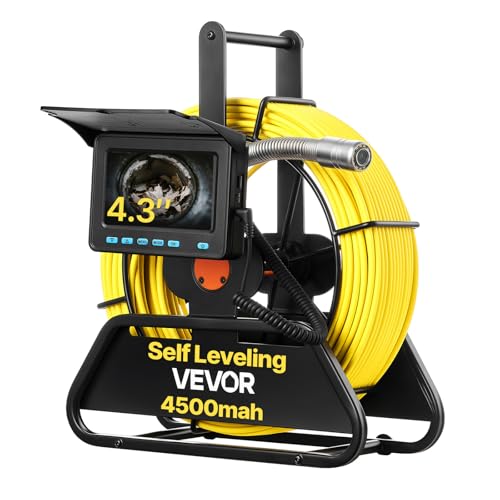
VEVOR 164 ft Self-Leveling Sewer Camera (4.3" screen)
Home sewer lines and drains of about 2 inches and up
- Cable
- 164 ft (50 m)
- Screen
- 4.3"
- Head
- 23 mm, self-leveling
- Self-leveling head keeps the picture upright as the cable twists
- Length markers along the fiberglass cable
- IP68 head with a sapphire lens and 12 LEDs
- 4500 mAh battery, up to 5 hours; 16 GB card included
- 4.3-inch screen is small for long sessions
- Rated for 1.97–5.9 in pipes: not for 1.5-inch drains

VEVOR 164 ft Sewer Camera with 512 Hz Locator (9" screen)
Finding exactly where a problem is before you dig
- Cable
- 164 ft (50 m)
- Screen
- 9" (720p)
- Head
- 23 mm, 512 Hz sonde
- 512 Hz sonde in the head, with a handheld receiver to find it from above ground
- Large 9-inch screen with video recording; 16 GB card
- Stainless head with a sapphire lens and 130° view
- Length markings on the cable; 4500 mAh, about 6 hours
- No self-leveling
- VEVOR gives the locator's detection range as within 1.5 m (about 5 ft)

VEVOR 98 ft Sewer Camera (7" screen)
Occasional checks on house drains and shorter sewer runs
- Cable
- 98 ft (30 m)
- Screen
- 7" (480p)
- Head
- 25 mm
- Widest pipe range here: 1.18–7.87 in straight, 1.97–7.87 in through 90° bends
- 7-inch screen with video recording; 16 GB card
- IP68 head with 12 LEDs; 4500 mAh, up to about 6 hours
- No self-leveling or locator
- 480p screen and a 1000TVL camera give modest detail

RIDGID SeeSnake microReel with micro CA-350 Camera
Plumbers and serious DIYers who want a platform that grows
- Cable
- 100 ft (30 m)
- Screen
- 3.5" (CA-350)
- Head
- 25 mm, 512 Hz sonde
- RIDGID SeeSnake reel with a built-in 512 Hz sonde
- Rated for 1.5–4 in lines, per RIDGID
- CA-350 records photos and video at 640×480; the reel also works with other SeeSnake monitors
- Hardened stainless-steel spring behind the camera head
- RIDGID says the CA-350 does not support TruSense features or distance count on APX reels
- Small 3.5-inch screen; a sonde locator is sold separately
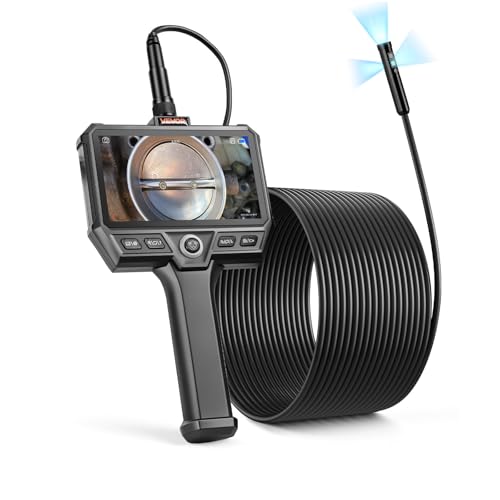
VEVOR SC16 Triple-Lens Endoscope (32.8 ft rigid cable)
HVAC ducts, wall cavities and short pipe runs
- Cable
- 32.8 ft (10 m)
- Screen
- 5" (854×480)
- Head
- 8 mm, triple lens
- Front and two side cameras
- Stiff 32.8 ft cable pushes along ducts and cavities
- IP67 probe; 5000 mAh battery, about 5–6 hours
- Up to 8x digital zoom
- Not a sewer camera: no reel, and IP67 rather than IP68
- 720p camera
Why you should trust us
Over two decades of aviation inspection taught SK Kutubuddin to work through a system methodically and record what he found, rather than glance and guess. A drain line rewards the same discipline: go in from the right access point, move slowly, note the distance at every joint, and save the video so you or a plumber can review it.
We compared push-cable sewer cameras and a long-reach endoscope for ducts, and checked cable length, head size, pipe range, screen and features against the manufacturer's specifications and the live listing, per our how-we-test method. VEVOR appears several times because it is one of the few makers in this price range that publishes full specifications on its own site, which our method requires. This page rests on verified specs, not a lab test.
Who this is for
This page is for homeowners who want to see why a drain keeps clogging, buyers checking a house's sewer line, landlords, handymen and anyone starting out with drain camera work.
If you only need to look a few feet into a vent, a wall or a sink trap, a general inspection camera is simpler and cheaper; see our inspection camera picks.
- Recurring clogs and slow drains
- Checking a sewer line before buying a house
- Finding roots or a broken joint before you dig
- Locating a line or a problem from above ground
How we picked
We picked for real drain and sewer work and confirmed each figure on the maker's own pages.
Enough reach
Cable length decides whether you reach the problem. We favored 100 ft or more for sewer lines and said plainly where a camera is built for shorter runs.
A head that fits the pipe
We recorded each maker's stated pipe range, including the smallest pipe it will turn a 90° bend in, which is usually the limit that matters.
Features that answer real questions
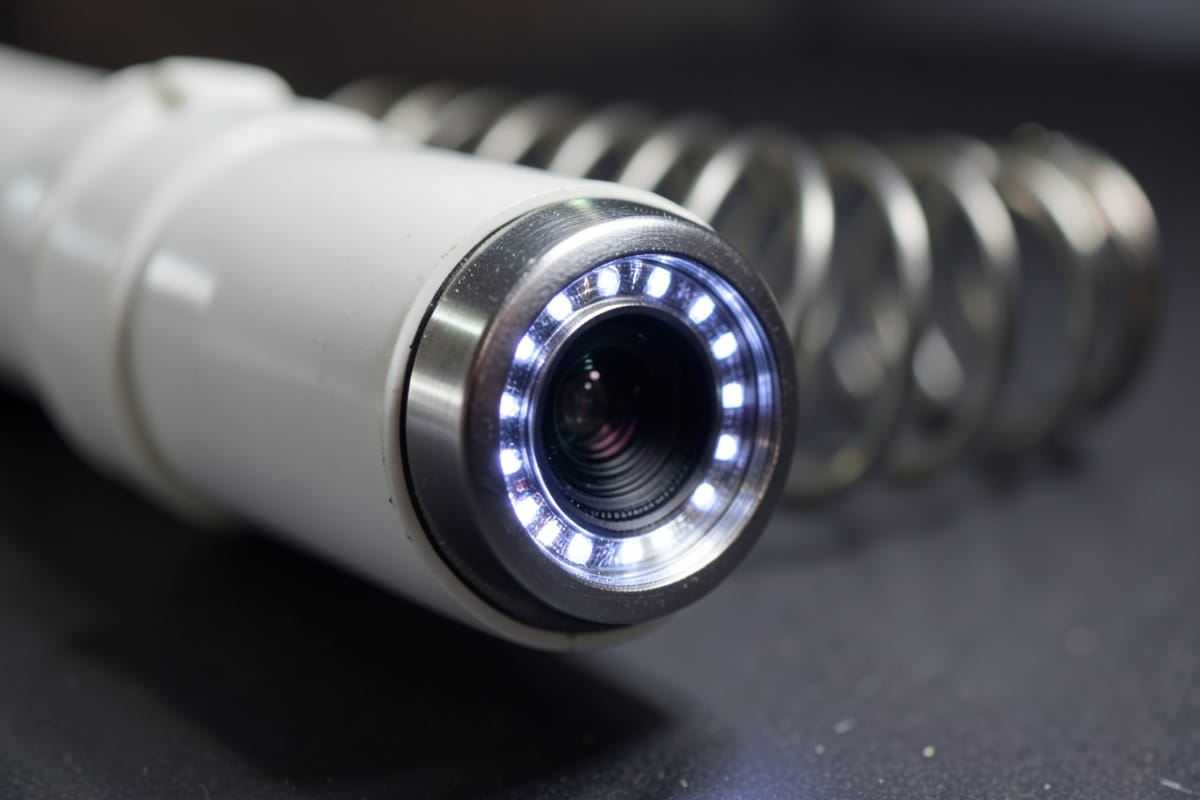
Self-leveling keeps the picture upright so you can tell which way is down; a 512 Hz sonde lets a locator find the camera from above ground before you dig.
A path from DIY to pro
We included a RIDGID SeeSnake system for anyone who wants a professional platform that can grow with other reels and monitors.
Pipe camera or borescope?
A borescope or inspection camera has a short, semi-rigid cable that is fine for a few feet into a wall or a sink trap. A sewer line needs a push cable, usually fiberglass, stiff enough to feed through tens of feet of pipe and around bends, with a camera head built to live in water (IP68) and a reel to manage the cable. Use each for its own job.
Match the camera to the pipe
Inside the house, sink drains are typically 1.5 inches, tubs and showers 1.5–2 inches, and toilets need at least a 3-inch pipe. The sewer lateral that carries it all to the street is usually 4 inches or larger. Most of the 23–25 mm heads here suit 2- to 6-inch lines. To get through bends in 1.5-inch drains you need a more flexible cable, such as a RIDGID microReel (25 mm head, mid-flex cable), or a smaller head, such as RIDGID's 22 mm microDrain.
For cable length, measure the run from the cleanout you plan to use to the point you need to see, and add some spare. The International Plumbing Code calls for cleanouts on building sewers at intervals of no more than 100 feet, so a 100 ft cable generally reaches from one cleanout to the next; 164 ft gives margin for longer runs.
Self-leveling, locators and distance
As you push a cable, it twists, and a fixed camera's picture rotates with it until you cannot tell which way is down. A self-leveling head keeps the image upright, which makes it much easier to judge where water is pooling or a joint has dropped.
A 512 Hz sonde is a small transmitter in or behind the camera head. A matching receiver finds its signal from above ground, and some show the depth when you are over it, so you can mark the exact spot before you dig. Cable markings or a distance counter tell you how far along the line you are, not how deep the pipe is.
What a camera can and cannot tell you
A camera shows roots, grease and scale, cracks, offset or separated joints, sags where water collects, and foreign objects. It does not clear anything, and it cannot measure a leak rate or a pipe's structural strength. For a house purchase or a major repair, have a qualified plumber review the footage.
Where to put the camera in
Go in through a cleanout if the house has one: it gives an open, direct entry to the line. InterNACHI's sewer-scope standards have home inspectors go in through a proper cleanout or a roof vent stack; for DIY work, a ground-level cleanout is the safer choice. Open the cap slowly, because a blocked line can be holding back wastewater, and run some water down the line first if it is draining, to clear the view.
Cleaning up after an inspection
Wear gloves, and wipe the cable down as you pull it back rather than after it is coiled on the reel. Clean the camera head and the first few feet of cable with water and a mild disinfectant, and let everything dry before you close the case.
Frequently asked questions
- What is the best pipe inspection camera for home use?
- A self-leveling push-cable camera with 100 ft or more of cable suits most home sewer lines. Our top pick is the VEVOR 164 ft self-leveling camera; add a locator model if you expect to dig.
- How long a cable do I need for a sewer camera?
- Enough to reach from your cleanout to the problem, plus some spare. Building sewers generally have cleanouts no more than 100 feet apart under the International Plumbing Code, so 100 ft is a sensible minimum; 164 ft gives more margin.
- What does a 512 Hz sonde do?
- It is a small transmitter in the camera head. A receiver tuned to 512 Hz finds it from above ground, so you can locate the camera, and the problem it is looking at, before you dig.
- What does self-leveling mean on a sewer camera?
- The camera keeps the image upright as the cable twists, so the bottom of the pipe stays at the bottom of the screen.
- Can I use a regular borescope in a sewer line?
- Only for a few feet. Borescope cables are short and not stiff enough to push through long runs, and most probes are IP67 rather than IP68. A sewer line needs a stiff push cable on a reel.
- Can a sewer camera find a leak?
- It can show the likely cause, such as a crack, a separated joint or roots, but it cannot measure a leak. A plumber may pair camera footage with other tests.
- Can a sewer camera tell me how deep the pipe is?
- Only with a locator. A 512 Hz sonde in the camera head transmits a signal a receiver can pick up from above ground, and some receivers show the depth when you are over it. Cable markings show distance along the pipe, not depth.
- Can I push a sewer camera past a clog?
- Usually not, and you should not force it. The camera shows you the blockage and how far along the line it is; clear it with a drain machine, then run the camera again to see what caused it.
- Will a sewer camera fit a 1.5-inch sink drain?
- Most 23–25 mm heads are rated for bends only in pipes of about 2 inches and up. For small drains, check the maker's pipe range; RIDGID rates its microReel for 1.5–4 in lines.
Related reading
- Aeronautics diploma
- Engineering degree
- BAMEC (DGCA)
- QC-trained
- ~2 yrs tool management
SK spent over two decades in aircraft maintenance, working hands-on with aero-engine systems and flight data recorder systems, borescope-inspecting turbine and compressor blades, and spending almost two years in a dedicated tool bay. He holds a diploma in mechanical engineering (aeronautics), an associate degree in science, an engineering degree and a Basic Aircraft Maintenance Engineer's Certificate (BAMEC) from DGCA, and has completed quality-control and aviation fuels & lubricants training. GaugeGrade applies the same inspection, torque and tool-management standards to the tools everyday mechanics, DIYers and trades actually buy.