The Best Torque Screwdrivers, Adjustable and Digital
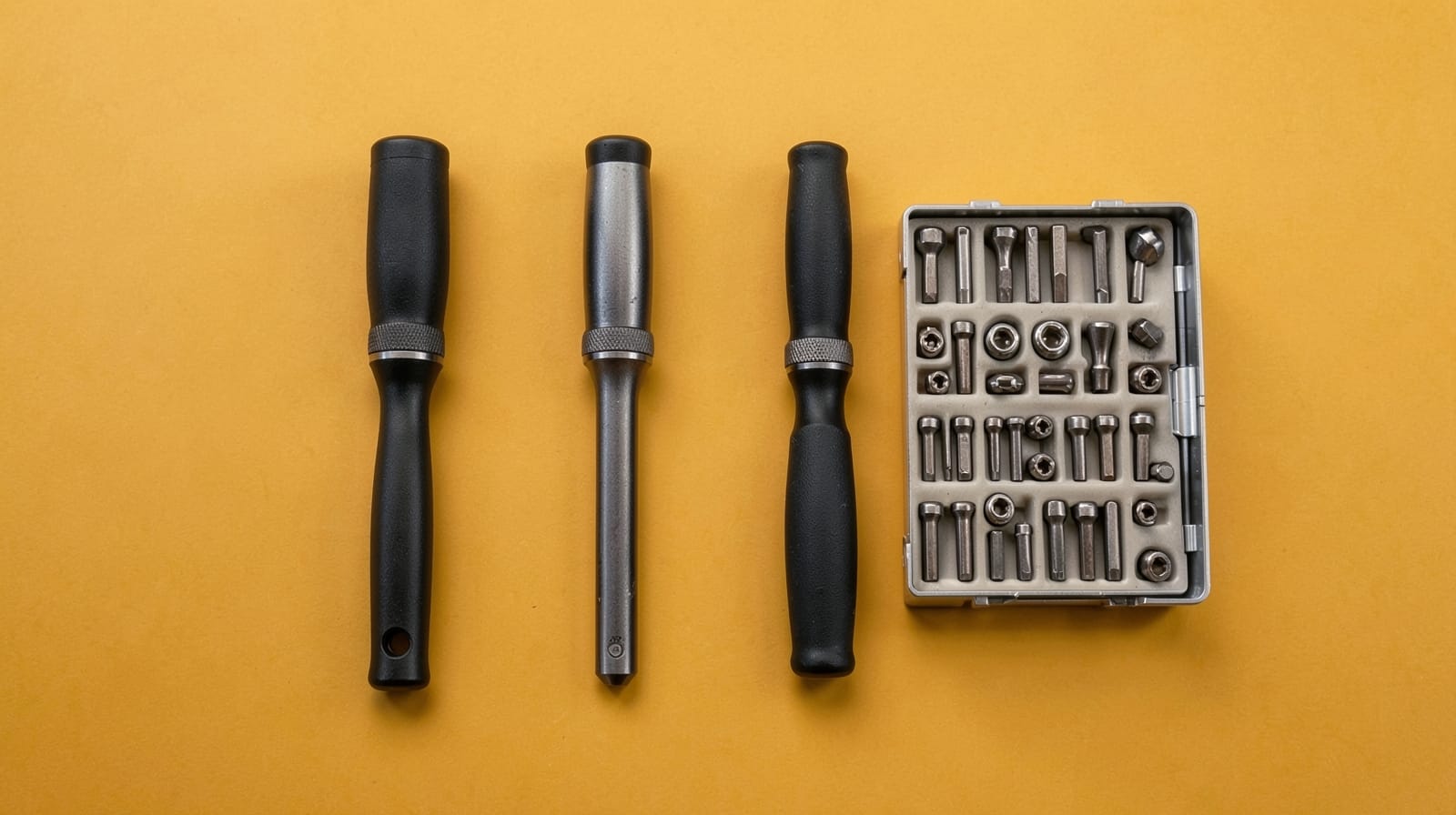
A torque screwdriver puts a set, repeatable amount of torque on small fasteners — electronics, optics, bike components, connectors — where a torque wrench is far too coarse. Most are adjustable: you set the value on a scale or with a key, and the driver clicks or slips when you reach it. The choice that matters most is a range that matches your fasteners. These are the picks that get that right, by use.

- 5 picks compared
- Specs checked against maker data
- No paid placements
GaugeGrade is reader-supported. When you buy through links on our site we may earn an affiliate commission at no extra cost to you. We only recommend gear we have researched against verified manufacturer specifications.
- 1Match the range to the work: small electronics screws want roughly 2–10 in-lb; general precision work is happy in a 5–40 in-lb tool.
- 2Adjustable dials to any value in its range; preset is fixed; digital reads out and beeps at the target.
- 3Buy a tool whose range centers on your fasteners — torque tools are most accurate in the middle of their range, not at the extremes.
- 1Best precision adjustableWera Kraftform 7445 Adjustable Torque Screwdriver
- 2Best for electronicsWiha 28591 ESD TorqueVario-S Set, 5–10 in-lb (24 pieces)
- 3Best professional / wide rangeCDI 401NSM Micro-Adjustable Torque Screwdriver
- 4Best digitalGROWNEER Digital Torque Screwdriver Set
- 5Best value / best setNEIKO 10573B Torque Screwdriver Set
What we recommend
Compare the key specs side by side, then read the full notes on each pick below.
- Torque range
- 2.5–11.5in-lb
- Type
- Adjustable
- Drive
- 1/4"hex
- Torque range
- 5–10in-lb
- Type
- Adjustable
- Drive
- 4mm micro bits
- Torque range
- 50–450 cNm(4.4–39.8 in-lb)
- Type
- Micro-adjustable
- Drive
- 1/4"hex
- Torque range
- 2.66–53.1 in-lb(0.3–6 N·m)
- Type
- Digital
- Drive
- 1/4"
- Torque range
- 10–50in-lb
- Type
- Adjustable set(20 bits)
- Drive
- 1/4"hex


Wera Kraftform 7445 Adjustable Torque Screwdriver
Low-torque precision on electronics, optics and delicate fasteners
- Torque range
- 2.5–11.5 in-lb
- Type
- Adjustable
- Drive
- 1/4" hex
- Fine 2.5–11.5 in-lb range for delicate work
- Distinct audible and tactile signal at the set value
- Quick-release chuck: bits change without losing the setting
- Takes standard 1/4" bits
- Narrow maximum torque — not for higher-range jobs
- Premium price
The pick for the smallest screws on this page that still take ordinary 1/4-inch bits. It sets from 2.5 to 11.5 in-lb in 0.5 in-lb steps by hand, with no key, and the Rapidaptor chuck lets you change bits without touching the setting.
Wera rates it ±6% to DIN EN ISO 6789, the same figure as the other mechanical drivers here, and builds it in the Czech Republic. The top of the range is low, so it's a specialist, not a do-everything driver.
Based on the maker's specifications and manual and the published reviews linked below, not on our own test of this unit.
Setup, everyday use and what others found
Setup & use · per the maker
- Set the torque by hand on the handle's scale, from 2.5 to 11.5 in-lb in 0.5 in-lb steps. No setting key or special tool is needed.
- A distinct audible and tactile signal marks the set value. The limit applies only when driving in; for loosening you get full, unlimited torque.
- Standard 1/4-inch hex bits fit the Rapidaptor quick-release chuck, so bits change without disturbing the setting.
- Rated ±6% to DIN EN ISO 6789. Wera says to have it checked every 5,000 load cycles at the latest, or every 12 months if you can't count the cycles.
- Wera's warranty on its torque tools covers up to 5,000 cycles within the first year, per a Wera dealer.
- An ESD-safe version with the same range (7445 ESD) is sold separately.
What others found
We found no independent test and no owner reviews outside Amazon that name the 7445 itself. A 2017 torque-driver shootout on the Sniper's Hide forum left Wera out.

Wiha 28591 ESD TorqueVario-S Set, 5–10 in-lb (24 pieces)
Small electronics screws on a static-controlled bench, with the bits already in the box
- Torque range
- 5–10 in-lb
- Type
- Adjustable
- Drive
- 4 mm micro bits
- Precise 5–10 in-lb range for small screws
- ESD-safe handle, for work on static-sensitive components
- Set with a separate adjustment tool, so the value can't be knocked off by accident
- 24 micro bits, a non-magnetic holder and a storage box included
- Serialized, with a certificate of calibration; meets ASME B107.14M and EN ISO 6789
- Very low 10 in-lb maximum
- Takes 4 mm micro bits, not 1/4" bits
- You buy the bit set whether or not you need it; the bare 28524 handle is sold separately
Wiha's TorqueVario-S in its 5–10 in-lb form, bought as the 28591 set: the ESD-safe 28524 handle with 24 micro bits, a non-magnetic bit holder and the adjustment tool in a storage box. A narrow, low range for small electronics screws, set with a separate tool so the value can't be knocked off in a drawer or a pocket.
The ESD-safe handle is the reason to choose this one over the plain 28502: Wiha builds it for work on static-sensitive components. Check the bits before you buy — this driver takes Wiha's 4 mm micro bits, not ordinary 1/4-inch bits.
Based on the maker's specifications and manual and the published reviews linked below, not on our own test of this unit.
Setup, everyday use and what others found
Setup & use · per the maker
- Torque is set with Wiha's torque adjustment tool and read in a window on the handle, from 5 to 10 in-lb. Needing the tool keeps the value from being changed by accident.
- An audible click signals the set torque, and the mechanism resets itself for the next screw.
- The handle is ESD-safe, which is what separates it from the otherwise identical 28502. Wiha describes it as safe for work on static-sensitive electronic components but publishes no surface-resistance figure for it.
- Rated ±6% to ASME B107.14M, EN ISO 6789 and BS EN 26789, with a laser-calibrated scale and accuracy quoted to 5,000 cycles. It's serialized, with a certificate of calibration.
- The 24 bits are four slotted (1.5, 2.0, 3.0 and 4.0 mm), three Phillips (#00, #0, #1), six Torx (T6 to T15) and eight hex inch (.050 to 5/32 in), per the dealers who list the contents; Wiha's own page names the set but not the individual bits. For 1/4-inch bits you need Wiha's separate adapter blade (28581), or the 1/4-inch version of this driver (28411).
- Wiha designs its torque tools for 5,000 cycles or one year, whichever comes first, and replaces them within that period. After it, Wiha offers a replacement handle at a reduced cost.
What others found
A 2017 torque-driver shootout on the Sniper's Hide forum checked three other TorqueVario-S models (10–50, 18–62 and 5–18 in-lb) on a torque tester and found them well inside Wiha's ±6% rating. The 5–10 in-lb version wasn't tested.
We found no owner reviews or independent tests of the 5–10 in-lb handle itself outside Amazon. The set's contents come from Wiha dealers rather than from Wiha, whose own page for the 28591 lists the standards and the certificate but not what is in the box.

CDI 401NSM Micro-Adjustable Torque Screwdriver
Pros who want one serialized, certified driver for most small-fastener jobs
- Torque range
- 50–450 cNm (4.4–39.8 in-lb)
- Type
- Micro-adjustable
- Drive
- 1/4" hex
- 50–450 cNm covers most small-fastener work, in 5 cNm steps
- Pull-and-lock knob against an engraved scale
- Cam-over clutch slips at the set value, so it can't over-tighten
- Individually serialized, with a NIST-traceable calibration certificate
- Certified to ASME B107.14M and ISO 6789
- The scale is in cNm, not inch-pounds, so US specs need converting
- Rated ±6% clockwise only, and only from 90 cNm (8 in-lb) up
- Bits not included; costs more than budget sets
The industrial choice: a 50–450 cNm CDI driver set with a pull-and-lock knob against an engraved scale in 5 cNm steps, individually serialized and supplied with a NIST-traceable certificate.
Its cam-over clutch slips at the set value, so it can't be pushed past it, and it measures clockwise only. CDI's ±6% rating applies from 20% of the scale, 90 cNm, upwards, so the bottom of the range sits outside it.
Based on the maker's specifications and manual and the published reviews linked below, not on our own test of this unit.
Setup, everyday use and what others found
Setup & use · per the maker
- Pull the knob back to unlock it, turn it to the value on the scale, then push it forward until it clicks into the locked position.
- Cam-over design: at the set torque it gives a click you can hear or feel and slips, then resets itself for the next screw.
- Measures clockwise only. Counter-clockwise it locks solid so you can back screws out, but CDI's manual says not to use it to break tight fasteners loose.
- Rated ±6% of the reading, clockwise, from 20% to 100% of full scale. On this model that is 90–450 cNm, so the bottom of the dial, 50–90 cNm, is outside the rated band.
- The scale is metric. 50–450 cNm works out to about 4.4–39.8 in-lb, and the 5 cNm steps to about 0.44 in-lb. The 401SM is the same tool with the scale marked 5–40 in-lb in 0.5 in-lb steps.
- The 1/4-inch hex bit holder has a rare-earth magnet. Bits aren't included.
- Store it in its tube at the lowest setting, wipe it clean, and don't immerse or oil it. CDI gives no fixed recalibration interval, only that periodic recalibration is needed. The manual gives a one-year warranty.
What others found
CDI publishes its ±6% figure as a family specification covering all six micro-adjustable models rather than a per-model rating, and states it for the clockwise direction only. No counter-clockwise accuracy figure is published for any of them.
We found no independent hands-on test of the 401NSM, and Amazon's reviews could not be read. Some distributor listings for this family quote a ±4% figure and claim counter-clockwise accuracy; CDI's own catalogue states neither, so we have not used them.


GROWNEER Digital Torque Screwdriver Set
People who work to varied specs and want a readout with a target alert
- Torque range
- 2.66–53.1 in-lb (0.3–6 N·m)
- Type
- Digital
- Drive
- 1/4"
- Digital readout; buzzer and LED warn near the target and signal at it
- Wide 2.66–53.1 in-lb (0.3–6 N·m) range
- Switches between units
- 19 bits, 5 sockets and a case included
- Battery-dependent
- No clutch described: you stop turning at the alert
- Little maker documentation beyond the listing
The one digital driver here. It shows the torque as you turn, beeps and flashes as you approach the target and again when you reach it, and covers 2.66–53.1 in-lb, the widest range on this page.
It indicates rather than limits: the maker describes alerts, not a clutch, so you stop turning when it signals. GROWNEER publishes little beyond the Amazon listing, so its ±2% rating and warranty terms are hard to check.
Based on the maker's specifications and manual and the published reviews linked below, not on our own test of this unit.
Setup, everyday use and what others found
Setup & use · per the maker
- Shows torque live on a digital display in kg-cm, N·m, in-lb or ft-lb, from 0.3 to 6 N·m (2.66–53.1 in-lb), per the listing.
- Offers 6 preset modes and stores up to 500 readings, per the listing.
- A buzzer and LED warn as you approach the preset and signal when you reach it.
- Rated ±2% by the maker, with no range or direction stated.
- Bits fit a quick-change magnetic holder. The set has 19 bits plus a bit adapter, 5 sockets, a separate screwdriver, a storage case and AAA battery power.
- When the battery dies, the readout and alerts go with it. Keep a spare in the case.
What others found
One owner reported that their unit was within 0.5% over part of its range, better than the rated ±2%, and more accurate at the low end than a Wheeler FAT; they didn't say how they checked. Another confirmed it beeps as you near the setting and gives a solid buzz at the target.
We found no independent test with measurements, and only two owner reviews could be read outside Amazon.


NEIKO 10573B Torque Screwdriver Set
DIY, HVAC and general shop use on a budget
- Torque range
- 10–50 in-lb
- Type
- Adjustable set (20 bits)
- Drive
- 1/4" hex
- Adjustable 10–50 in-lb in 5 in-lb steps
- 20 bits (Phillips, slotted, Torx, hex) and a hard case
- Low cost of entry to torque-controlled driving
- Rated ±6%, but no standard or calibration certificate is mentioned
- 10 in-lb minimum and 5 in-lb steps are too coarse for the smallest screws
The low-cost way into torque-controlled driving: a 10–50 in-lb clicker with 20 bits and a hard case, set with a pull-turn-lock handle.
It sets only in 5 in-lb steps, and NEIKO cites no standard and mentions no calibration certificate for its ±6% claim. That suits shop and HVAC work better than jobs that need paperwork.
Based on the maker's specifications and manual and the published reviews linked below, not on our own test of this unit.
Setup, everyday use and what others found
Setup & use · per the maker
- Pull the handle back, turn it to the value in the window, and let it return to lock. Settings run from 10 to 50 in-lb in 5 in-lb steps.
- At the set torque the handle clicks forward on each further turn, separately from the shank, so the bit stops turning.
- Rated ±6% by NEIKO. No standard or calibration certificate is mentioned.
- Long shank with a 1/4-inch hex adapter. The 20 bits are Phillips #0 to #3 (two of each), 4 and 6 mm slotted, tamper-proof Torx T10 to T40, and 3 to 6 mm hex, with two bit holders and a hard case.
- We couldn't find a warranty term or recalibration advice from NEIKO for this set.
What others found
GearHungry's writer said it read within an in-lb or two of a certified torque screwdriver used alongside it, noted that it came without a calibration certificate, and found the case's hinges and clips flimsy.
A retired state electrical inspector on Mike Holt's forum (2024) said they have been happy with theirs.
The Walmart reviews we could read were all marked as incentivized, and we found no owner who had checked one on a torque tester.
- Aeronautics diploma
- Engineering degree
- BAMEC (DGCA)
- QC-trained
- ~2 yrs tool management
Why you should trust us
SK Kutubuddin spent over two decades in aircraft maintenance, where small fasteners get the same discipline as big ones. Aviation torque tables are commonly written in inch-pounds, and tightening a small screw to a written value with a calibrated driver was routine work on the flight line, not a special occasion. With an engineering degree, a BAMEC, quality-control training and a qualification in aviation fuels and lubricants, he knows how easily a small thread strips when it is tightened by feel.
For this page we started from the jobs people actually buy a torque screwdriver for, such as electronics, optics, bike parts and precision assembly, and shortlisted tools whose ranges center on those fasteners. Each pick's torque range, type and drive was checked against the manufacturer's specifications and the current retail listing, following our how-we-test method. This is a buying guide built on verified specs and long experience with the category, not a lab shoot-out, and we say so plainly.
Who this is for
A torque screwdriver is for anyone whose fasteners are too small, or too delicate, for a torque wrench. If you open up electronics, mount optics, service a bike with carbon or lightweight parts, or assemble anything that comes with a torque value printed in inch-pounds or newton-meters, one of these belongs in your kit.
It is not the tool for lug nuts, suspension or most engine work. Once a spec climbs past what a screwdriver handle can comfortably deliver, move up to an inch-pound or foot-pound wrench.
- Electronics repair and assembly, where plastic bosses and small threads strip easily
- Optics mounts, rings and bases that list a torque value
- Bicycle stems, clamps, seatposts and carbon components with low printed specs
- HVAC, appliance and general shop work that needs controlled, repeatable driving
- Hobby builds such as drones, RC models and 3D printers that use small machine screws
How we picked
We judged torque screwdrivers on what decides whether the right torque actually reaches a small screw. Every figure on the page was checked against the manufacturer's specifications and the current listing before a tool made the cut.
- 01
A range that centers on real fasteners
A torque tool is least accurate at the ends of its range, so we looked for ranges whose middle sits on common small-fastener work. That is why the picks run from delicate low-range drivers to wider 5-40 and 10-50 in-lb options, rather than one tool stretched to do everything.
- 02
A setting method that suits the user
Adjustable, micro-adjustable and digital drivers each earn a place for different people. We weighed how precisely each can be set, whether the setting holds once it is dialed in, and whether a live readout genuinely helps someone who works to many different specs.
- 03
Standard bit compatibility
A torque screwdriver is only as good as the bit in it. Most picks take standard 1/4-inch hex bits, so you can fit quality bits in the exact profile your screws need instead of relying on whatever happens to come in the box. The Wiha takes Wiha's 4 mm micro bits instead, and its card says so.
- 04
Documented accuracy and a path to recalibration
A stated tolerance and the option to have the tool recalibrated matter more than any marketing claim. Where a budget tool's accuracy or long-term durability is less proven than a premium brand's, the page says so plainly, so you can weigh the saving against it.
What to know before you buy
What torque range do you actually need?
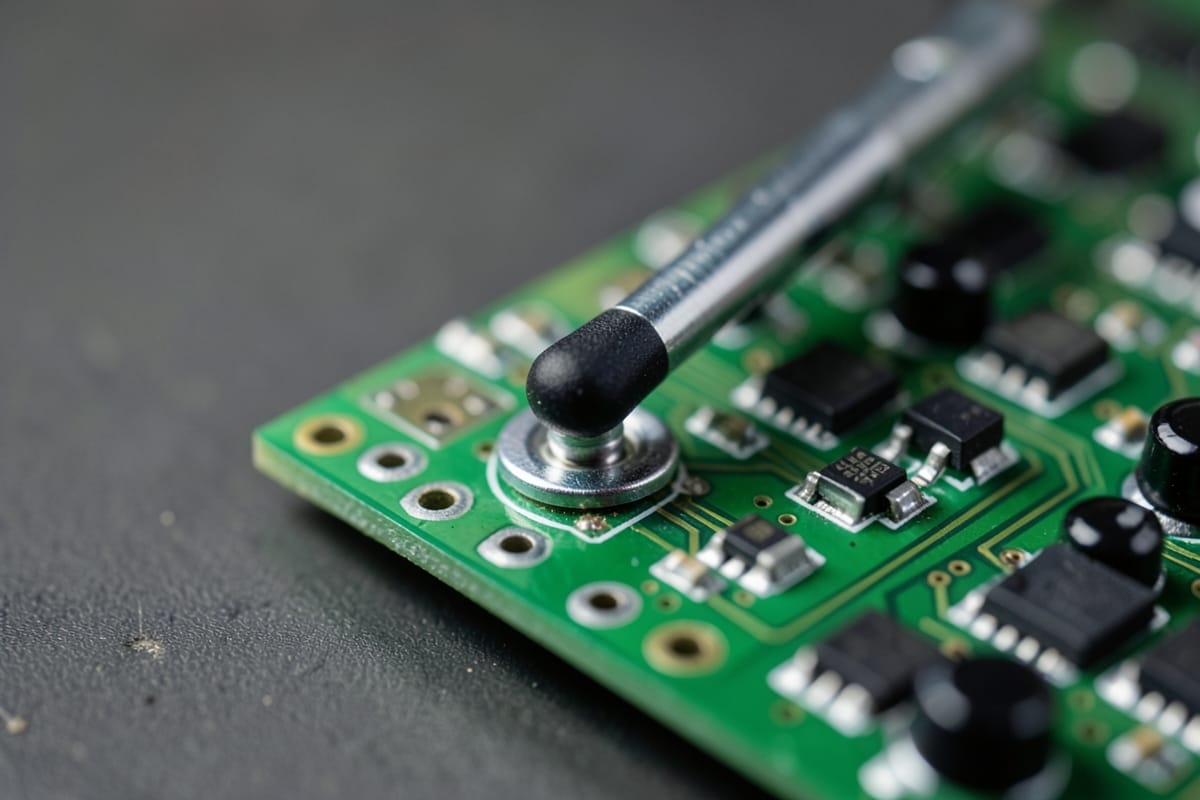
This is the decision that matters. Buy a tool whose range is centered on the fasteners you work on, because a torque tool is most accurate in the middle of its range and least accurate at the very ends.
- Small electronics, connectors, plastic housings: roughly 2–10 in-lb — a Wera 7445 or Wiha TorqueVario-S.
- General precision, optics mounts, bike components: roughly 15–40 in-lb — a CDI 401NSM covers this comfortably.
- Mixed specs: a digital tool with a wide range and a readout, like the GROWNEER, or a value set like the NEIKO.
- Electrical terminals and breakers: roughly 14–50 lb-in, with insulated tools where energized parts are nearby. See our picks for electricians.
How an adjustable torque screwdriver works
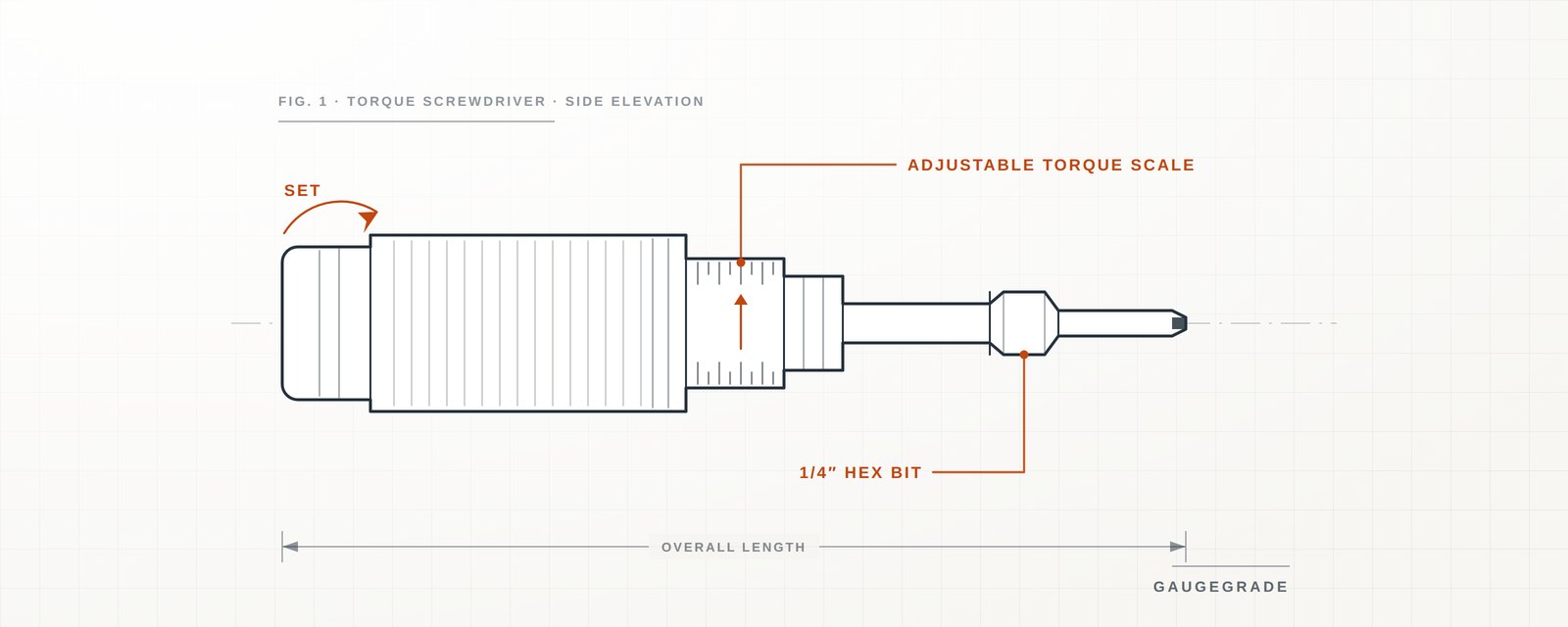
An adjustable torque screwdriver lets you set any value within its range. The mechanical picks here differ in two ways: how you set the value, and what happens when you reach it.
Setting comes in three forms. The Wera 7445 sets by hand on the handle's scale in 0.5 in-lb steps, with no key. The CDI 401NSM, which CDI calls micro-adjustable, and the NEIKO set use a knob or handle you pull back to unlock, turn to the value and return to lock: the CDI in 5 cNm steps, the NEIKO in 5 in-lb steps. The Wiha TorqueVario-S needs a separate setting key, so the value can't be changed by accident.
All four mechanical drivers signal the set value with a click, and on the Wera and Wiha that's your cue to stop. The CDI's cam-over clutch and the NEIKO's handle also slip past the set point, so the bit stops turning and extra effort adds nothing. A digital driver like the GROWNEER is different again: it shows the torque and alerts you at the target, but nothing stops you turning past it.
Preset drivers, fixed at one value, suit a production line where every screw gets the same torque. We haven't picked one, because most home and shop users work to more than one value.
How accurate is an adjustable torque screwdriver?
The international standard for hand torque tools, ISO 6789-1:2017, holds adjustable and preset torque screwdrivers to ±6%. That is the figure Wera, Wiha, CDI and NEIKO claim for the drivers here, though only Wera and Wiha cite ISO 6789 itself, and CDI's rating applies only from 20% of its scale, 90 cNm or about 8 in-lb, upwards.
That accuracy doesn't last forever. ISO 6789-2 gives 12 months or 5,000 cycles, whichever comes first, as the default interval between calibrations when you don't track the tool's use any more closely, and it calls for a check after an overload, a repair or any rough handling. Wera's advice for its drivers is every 5,000 load cycles, or every 12 months if you can't count cycles.
Keeping a torque screwdriver accurate
A torque screwdriver is only useful if it stays honest. Two habits from the flight line keep it that way: never store the tool wound up to a high setting — dial it back toward the low end of its range to relieve the spring — and never force it past its rated maximum. Have it recalibrated periodically if the work is important, and treat a dropped tool as suspect until it is checked.
The precision view
Over-tightening a small fastener is how you strip a thread, crack a housing or crush a gasket. Under-tightening is how it works loose. A torque screwdriver in the right range removes the guesswork, and on anything that matters — optics that must hold zero, electronics you do not want to re-open, components with a real torque spec — that repeatability is the whole point. Match the range to the fastener and the rest takes care of itself.
Bits, fit and alignment: getting the torque into the screw
A torque screwdriver controls how much torque leaves the handle. Whether that torque ends up in the screw depends on the bit and on how you hold the tool. A worn, undersized or wrong-profile bit cams out before the driver reaches its set value, chewing up the recess and leaving the screw short of spec. A Phillips bit in a Pozidriv screw, or an inch-size hex in a metric socket-head screw, are two of the most common culprits.
Hold the driver in line with the screw axis and keep steady pressure into the fastener, especially on cross-head screws, which try to push the bit out as torque builds.
- Use good-quality bits that fit the recess snugly, and replace them as soon as the tips round off.
- Match the profile exactly: Phillips, Pozidriv, Torx and hex are not interchangeable.
- Run long screws down first, then let the torque driver do the final tightening.
Reading small-fastener specs: N·m, cN·m, in-lb and oz-in
Small-fastener torque values turn up in more units than any other kind. Electronics and bicycle makers often write them in newton-meters, some precision drivers are scaled in centinewton-meters, many US specs use inch-pounds, and very light values are sometimes given in ounce-inches. The tool only helps if you set it in the same unit the spec uses, or convert carefully.
The costly mistake is a decimal slip. A centinewton-meter is one hundredth of a newton-meter, so 60 cN·m and 0.6 N·m are the same value, and confusing one for the other is a factor of 100. Convert first, then round to the nearest graduation your tool can set. If your driver switches units, as many digital models do, confirm the display unit before every job. For inch-pounds, foot-pounds and N·m, our torque unit converter does the arithmetic.
- 1 N·m = 100 cN·m ≈ 8.85 in-lb
- 1 in-lb ≈ 0.113 N·m ≈ 11.3 cN·m
- 1 in-lb = 16 oz-in
- 1 ft-lb = 12 in-lb ≈ 1.356 N·m
Frequently asked questions
What torque range should a torque screwdriver have?
Match it to your fasteners. Small electronics and delicate screws want roughly 2–10 in-lb; general precision work is well served by a 5–40 in-lb tool. Choose a range that centers on your work, since accuracy is best in the middle of the range.
in-lb or N·m — which should I pick?
It is only a unit of measurement; 1 N·m is about 8.85 in-lb. Pick the unit your fastener specs are written in, or a tool that switches between them.
What is an adjustable torque screwdriver?
A screwdriver you can set to any torque within its range, on a scale or with a setting key. When you reach the set value it clicks or slips, so every screw gets the same torque. It suits varied work better than a preset driver, which is fixed at one value.
Are adjustable torque screwdrivers accurate?
The standard for them, ISO 6789-1, allows ±6%, and that is what the mechanical drivers here are rated to. Some ratings leave out the bottom of the scale: CDI's starts at 20% of its range. Store the driver at its lowest setting and have it checked every 12 months or 5,000 cycles.
What is the difference between adjustable, preset and digital?
Adjustable dials to any value in its range and clicks at the target; preset is fixed to one value; digital shows a live reading and alerts you at the target. Adjustable suits varied work, preset suits repetitive work, digital suits many different specs.
Do torque screwdrivers need calibration?
Yes. ISO 6789-2 gives 12 months or 5,000 cycles, whichever comes first, as the default interval, and a check after any overload, repair or rough handling. Store the tool dialed back to the low end of its range and never exceed its rated maximum to keep it accurate longer.
Can I just use a torque wrench instead?
For small screws, no — a typical torque wrench's range starts far above what delicate fasteners need. Use an inch-pound torque screwdriver for precision work and save the torque wrench for lug nuts and larger fasteners.
Can I use a torque screwdriver with sockets?
Yes. A 1/4-inch hex to 1/4-inch square-drive bit adapter lets a torque screwdriver turn small sockets. Because the adapter sits on the same axis as the handle, it does not change the torque delivered. Keep the job within the screwdriver's range, and move to a torque wrench once the spec climbs beyond it.
Should I turn a torque screwdriver quickly or slowly?
Slowly and steadily, especially near the end. A fast, jerky turn can carry the screw past the set value before the mechanism releases, and it makes the signal harder to notice. Run the screw down, then make the final turn in one smooth, unhurried motion and stop as soon as the tool signals.
What is a cam-over torque screwdriver?
A cam-over (slip-clutch) driver disengages and freewheels once it reaches the set torque, so turning further cannot add more. A click or break-over type signals at the value and relies on you to stop. Cam-over designs suit repetitive assembly because they are hard to over-tighten with, but either type works when used correctly.
Related reading
- Aeronautics diploma
- Engineering degree
- BAMEC (DGCA)
- QC-trained
- ~2 yrs tool management
SK spent over two decades in aircraft maintenance, working hands-on with aero-engine systems and flight data recorder systems, borescope-inspecting turbine and compressor blades, and spending almost two years in a dedicated tool bay. He holds a diploma in mechanical engineering (aeronautics), an associate degree in science, an engineering degree and a Basic Aircraft Maintenance Engineer's Certificate (BAMEC) from DGCA, and has completed quality-control and aviation fuels & lubricants training. GaugeGrade applies the same inspection, torque and tool-management standards to the tools everyday mechanics, DIYers and trades actually buy.