Threadlocker Guide: Blue vs Red vs Purple vs Green
Threadlocker is a liquid (or stick) that cures into a tough plastic between the threads once a fastener is tightened, locking it against vibration and sealing the threads against corrosion. The color tells you the strength: purple is low, blue is medium and comes apart with hand tools, red is high and needs heat to remove, and green wicks into fasteners that are already assembled. Here is which one to use, how to apply it, and how to get it off again.

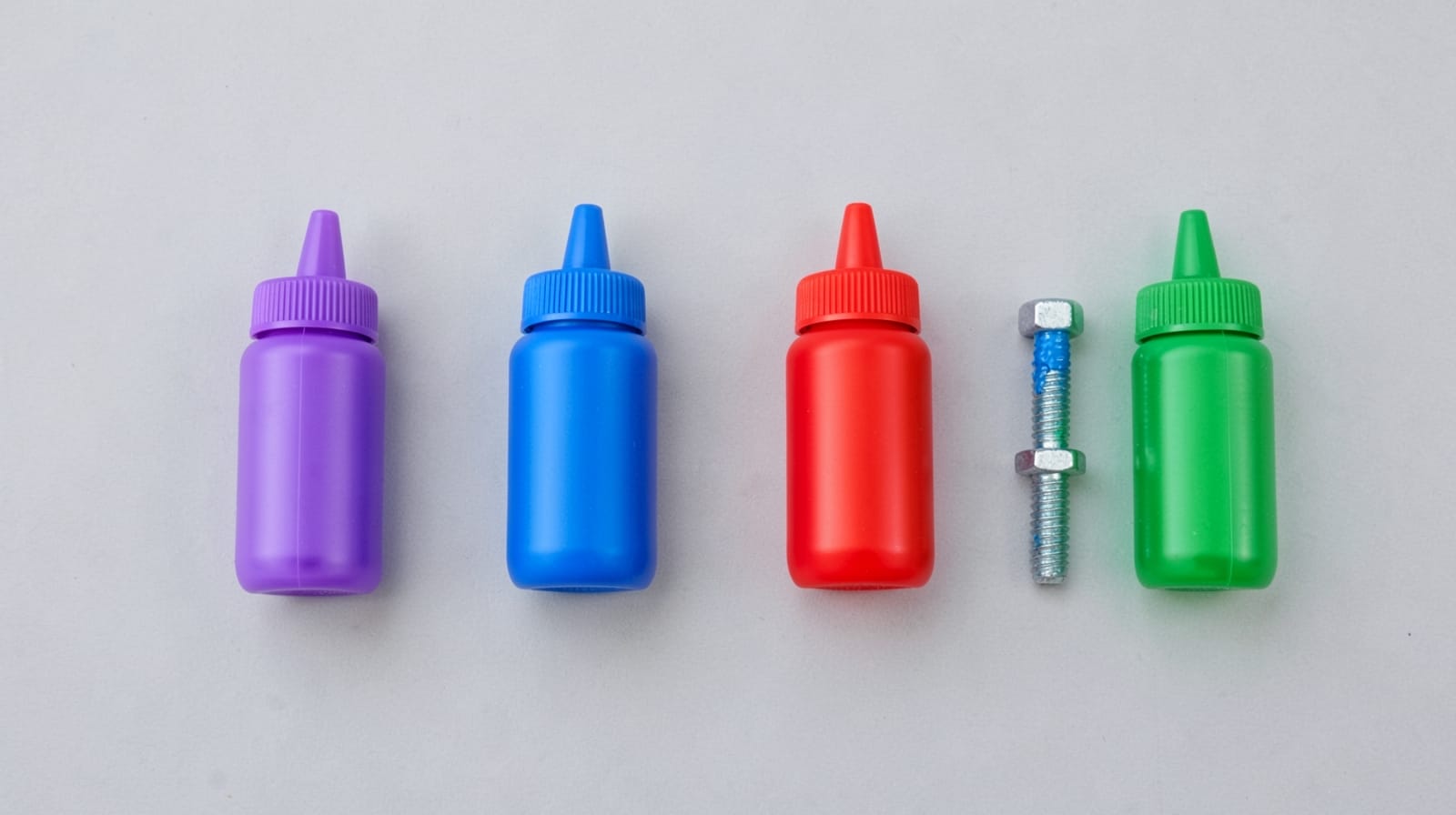
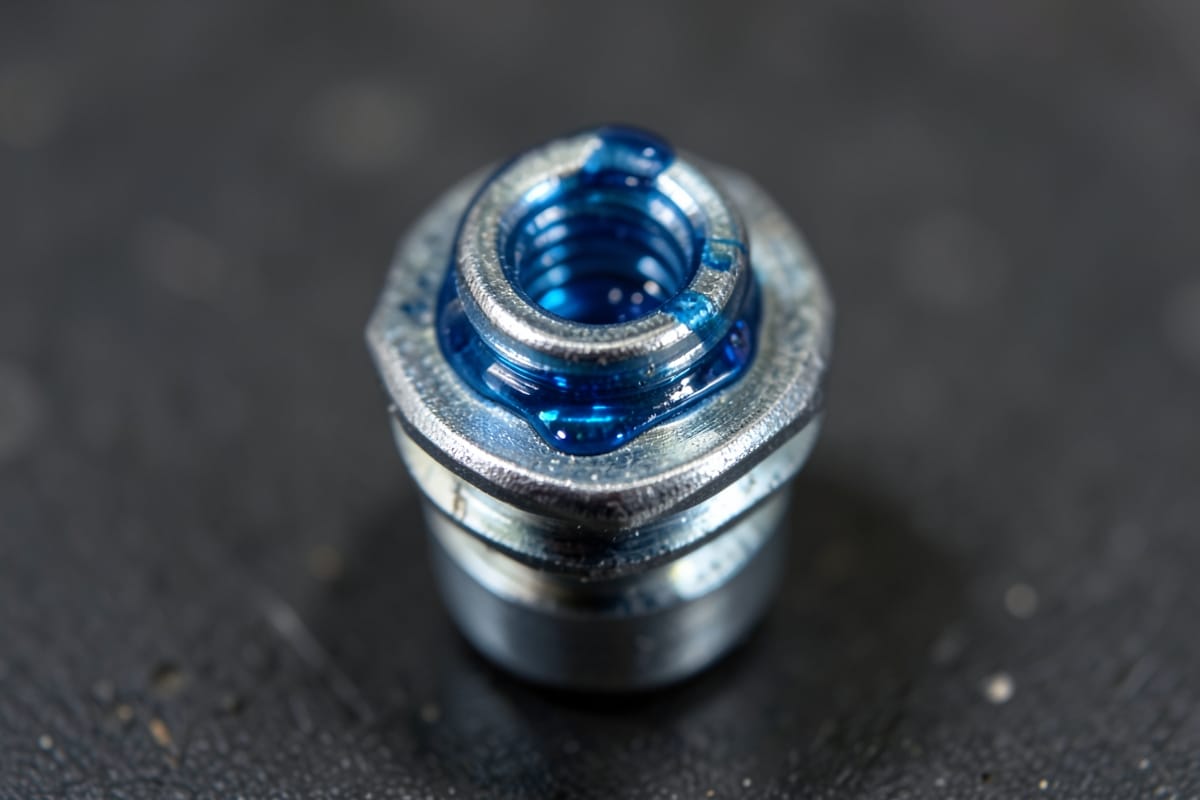
Threadlockers are anaerobic adhesives: they stay liquid in the bottle and cure only when trapped between metal threads, away from air. That is why a drop on a loose bolt does nothing until the fastener is tightened, and why the cure is quicker on active metals such as plain steel than on inactive surfaces such as stainless steel, zinc and plated parts.
Threadlocker is not a substitute for the correct torque, or for a mechanical lock where one is specified. On aircraft, fasteners are locked by the method the maintenance data specifies, such as safety wire, cotter pins or self-locking nuts, and a threadlocker is used only where that data calls for it. At home, use it on fasteners that shake loose, and follow your vehicle or equipment maker's instructions where they give one.
What you’ll need
- The right threadlocker grade
Purple, blue, red or green, chosen by fastener size and how often it must come apart.
- A solvent cleaner and clean rags
To remove oil, grease and old threadlocker so the new application cures properly.
- A primer, where the data sheet calls for one
Loctite calls for one when both parts are inactive metals, such as plated or black-oxide fasteners.
- See our picks →A torque wrench
Threadlocker does not replace the correct torque; tighten to spec while it is still liquid.
- A heat gun or torch (for red only)
Localized heat, roughly 450–500°F (230–260°C), releases high-strength threadlocker; keep it away from lines, plastics and anything flammable.
How to apply threadlocker
Pick the grade
Match the strength to how often the fastener must come apart: purple for small screws under 1/4 inch, blue for most nuts and bolts from 1/4 to 3/4 inch, red for studs and fasteners you do not expect to remove, and green for fasteners that are already assembled.
Clean the threads
Remove oil, grease and old threadlocker from both threads with a solvent cleaner, and let it dry. Clean threads give the most consistent cure and strength.
If both parts are inactive metals, such as plated or black-oxide fasteners into a plated part, Loctite's data sheets for its blue and red retail grades call for a primer.
Apply it in the right place
For a bolt and nut, put a few drops on the bolt threads where the nut will sit. For a blind hole, put the drops on the threads inside the hole, near the bottom, so the bolt does not simply push the liquid out as it goes in. Use enough to fill the engaged threads; more only makes a mess.
Assemble and torque straight away
Tighten the fastener to its specified torque while the threadlocker is still liquid. Liquid threadlocker lubricates the threads slightly, so if your service data gives a separate value for threadlocked fasteners, use that one.
Let it cure
Loctite's blue 242 and red 271 set in about 10 minutes on steel and reach full strength in about 24 hours; purple 222 begins to set in about 20 minutes. Loctite's retail data sheets say to apply above 50°F (10°C). Cure is slower in the cold and on inactive metals, so do not load the joint hard until it has cured.
Wick green in after assembly
For a fastener that is already tightened, apply a drop of wicking grade where the threads meet and let it draw into them by capillary action. Wipe off the excess. It is also used to seal fine porosity in welds and castings.
Remove it when you need to
Purple and blue come apart with ordinary hand tools. For red, heat the nut or bolt locally to roughly 450–500°F (230–260°C), the range Loctite gives for its red grade, and undo it while it is hot. Keep heat away from fuel, brake and hydraulic lines, plastics and anything flammable. Clean the cured residue out of both threads before reassembly, and use fresh threadlocker.
The threadlockers we recommend
Loctite's retail grades cover every job on this page, and each pick below is the grade we would reach for first. Permatex and Vibra-TITE sell comparable grades in the same colors.
GaugeGrade is reader-supported. When you buy through links on our site we may earn an affiliate commission at no extra cost to you. We only recommend gear we have researched against verified manufacturer specifications.
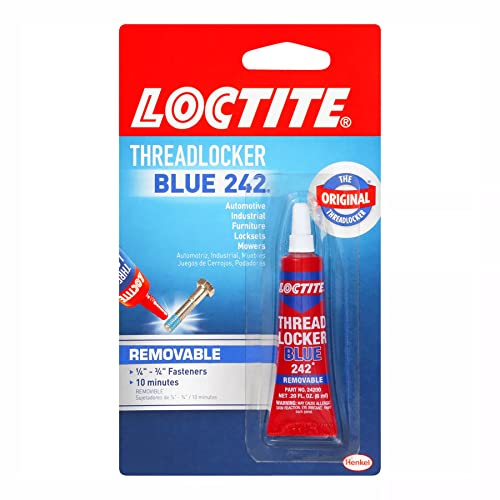
Loctite Threadlocker Blue 242 (6 mL)
Most nuts and bolts that will need servicing again
- Strength
- Medium, removable
- Fastener size
- 1/4–3/4 in (6–19 mm)
- Removal
- Hand tools
- The default grade for fasteners that vibrate loose but must come apart
- Sets in about 10 minutes on steel; full cure in 24 hours
- Rated -65°F to 300°F (-54°C to 149°C) once cured
- Loctite calls for a primer when both parts are inactive metals, such as plated or black-oxide
- Too strong for small screws under 1/4 inch: use purple

Loctite Threadlocker Red 271 (6 mL)
Studs and fasteners you do not expect to take apart
- Strength
- High, permanent
- Fastener size
- Up to 1 in (25 mm)
- Removal
- Heat to roughly 450–500°F
- High strength for heavy vibration and shock
- Sets in about 10 minutes on steel; full cure in 24 hours
- Rated -65°F to 300°F (-54°C to 149°C) once cured
- Needs localized heat, then hand tools, to remove
- Too strong for small fasteners

Loctite 222 Purple Threadlocker (6 mL)
Small screws that need occasional adjustment: set, adjustment and countersunk screws
- Strength
- Low
- Fastener size
- Under 1/4 in (6 mm)
- Removal
- Hand tools
- Low strength, so small screws come out without stripping
- Begins setting in about 20 minutes; full strength in 24 hours
- Rated -65°F to 300°F per Loctite
- Too weak for larger fasteners under heavy vibration
- Slower to set than blue

Loctite 290 Green Wicking Threadlocker (50 mL)
Fasteners that are already tightened, and porosity in welds and castings
- Strength
- Medium to high
- Fastener size
- #2 to 1/2 in (2.2–12 mm)
- Removal
- Localized heat and hand tools
- Thin enough to wick into threads that are already assembled
- Also seals porosity in welds and castings
- Full strength in about 24 hours on steel
- A 50 mL bottle is more than most home users need
- Made for fasteners up to 1/2 inch

Loctite Blue Threadlocker Stick (9 g)
Overhead and awkward repairs where a liquid would run off
- Strength
- Medium, removable
- Fastener size
- 1/4–3/4 in (6–20 mm)
- Removal
- Hand tools
- Same locking strength as Loctite's blue liquid, in a wax-like stick
- Will not drip or run, so it suits overhead work
- Can be applied to a part before assembly, per Loctite
- Goes on before assembly: it cannot wick into a fastener that is already tight
- Medium strength only; use red where you need permanent
Threadlocker colors and strengths
Makers use a common color code, so the color tells you roughly what you are holding. The figures below are Loctite's published data for its grades; the test bolts differ between grades, so use them as a guide to each grade rather than a strict ranking:
- Purple (low strength), Loctite 222: for screws under 1/4 inch (6 mm), such as set and adjustment screws; breakaway torque about 50 in-lb (6 N·m) on an M10 test bolt; removable with hand tools.
- Blue (medium strength), Loctite 242: for 1/4 to 3/4 inch (6–19 mm) fasteners; breakaway about 70–150 in-lb (8–17 N·m) on a 3/8-16 steel bolt; removable with hand tools.
- Red (high strength), Loctite 271: for fasteners up to 1 inch (25 mm); breakaway about 150–300 in-lb (17–34 N·m) on a 3/8-16 steel bolt; needs heat to remove.
- Green (wicking), Loctite 290: for pre-assembled fasteners from #2 to 1/2 inch (2.2–12 mm); about 270 in-lb (30 N·m) to break loose when wicked into a pre-torqued M10 bolt; also seals porosity.
Blue or red?
Start with blue. It stops fasteners shaking loose on engines, machinery and bikes, and it still comes apart with a wrench when the part needs servicing. That covers valve covers, brackets, water pumps and most of the fasteners people reach for threadlocker on.
Use red where a fastener should stay put: studs, fasteners on parts that are rarely serviced, and larger fasteners under heavy shock. Avoid red on small screws: getting them out means heat, and a small screw can shear before the cured threadlocker lets go.
When not to use threadlocker
Skip it where it does not belong:
- Where the maintenance data specifies another locking method, such as safety wire, a cotter pin or a self-locking nut.
- On plastic parts: anaerobic threadlockers can crack some plastics.
- In pure-oxygen or oxygen-rich systems, which Loctite's data sheets rule out.
- As a pipe-thread sealant: makers sell separate thread sealants for that job.
Threadlocker, safety wire or a locknut?
They solve the same problem in different ways. Threadlocker fills the gaps between the threads and bonds them, which stops the fastener turning and seals out moisture. Safety wire and cotter pins are positive mechanical locks you can inspect at a glance. Self-locking nuts use a deformed thread or a nylon insert to add friction.
Where maintenance data or a manufacturer specifies one of these, use exactly that. Where nothing is specified and a fastener keeps working loose, blue threadlocker is usually the simplest fix, and a stripe of torque seal across the fastener afterwards shows at a glance whether it has moved.
Why you should trust us
SK Kutubuddin spent over two decades maintaining and inspecting aircraft, where every fastener is locked by the method the maintenance data specifies and inspected to be sure it is. His qualification in aviation fuels and lubricants gives him a working knowledge of the oils, solvents and surface contamination that decide whether an anaerobic adhesive cures properly, and his quality-control training is why this guide leans on the maker's published data rather than rules of thumb.
The strengths, fastener sizes, temperature ranges, cure times and removal temperatures on this page come from Loctite's own technical data sheets and product listings for each grade, checked per our how-we-test method. Other brands' equivalent grades can differ, so check the data for the product you actually use.
Frequently asked questions
- Is blue or red threadlocker stronger?
- Red. Blue is medium strength and comes apart with hand tools; red is high strength and normally needs localized heat, roughly 450–500°F (230–260°C) for Loctite 271, before it will let go.
- How long does threadlocker take to dry?
- Loctite's blue 242 and red 271 set in about 10 minutes on steel and reach full strength in about 24 hours. Purple 222 begins to set in about 20 minutes. Cold and inactive metals slow the cure.
- Can you use threadlocker on stainless steel or aluminum?
- Yes, but on inactive metals it cures more slowly and typically reaches lower strength than on plain steel. Loctite's data sheets for its retail blue and red grades call for a primer when both parts are inactive metals.
- Is Loctite the same as threadlocker?
- Loctite is a brand that makes threadlockers. Permatex and Vibra-TITE also sell threadlockers in the same color grades; check each maker's data for strength and temperature range.
- Can I reuse a bolt that had threadlocker on it?
- Usually, if the bolt is undamaged and not a torque-to-yield fastener. Clean the old cured material from both threads first, and apply fresh threadlocker.
- Does threadlocker affect torque?
- Liquid threadlocker lubricates the threads a little while it is wet, so the same torque can produce slightly more clamp load. Where your service data gives a separate value for threadlocked fasteners, use it; otherwise use the normal specification.
- Can threadlocker go bad?
- Store it tightly capped, in a cool, dry place, and check the date on the package. If it has thickened or will not cure on clean steel, replace it.
Related reading
- Aeronautics diploma
- Engineering degree
- BAMEC (DGCA)
- QC-trained
- ~2 yrs tool management
SK spent over two decades in aircraft maintenance, working hands-on with aero-engine systems and flight data recorder systems, borescope-inspecting turbine and compressor blades, and spending almost two years in a dedicated tool bay. He holds a diploma in mechanical engineering (aeronautics), an associate degree in science, an engineering degree and a Basic Aircraft Maintenance Engineer's Certificate (BAMEC) from DGCA, and has completed quality-control and aviation fuels & lubricants training. GaugeGrade applies the same inspection, torque and tool-management standards to the tools everyday mechanics, DIYers and trades actually buy.