The Best 1/2-Inch Torque Wrenches
A 1/2-inch drive torque wrench is the one for wheels, suspension and the bigger chassis and driveline bolts: lug nuts, control arms, subframes and axle nuts. Its longer handle lets you reach 150–250 ft-lb with a steady pull. These are the best, from a two-direction calibrated click wrench to a US-made pro tool, a flex head, a split-beam and a digital.

GaugeGrade is reader-supported. When you buy through links on our site we may earn an affiliate commission at no extra cost to you. We only recommend gear we have researched against verified manufacturer specifications.
- For most cars and light trucks, a 1/2" wrench that tops out between 150 and 250 ft-lb covers lug nuts and chassis work.
- Choose a range that puts your common specs well inside the scale: most makers rate accuracy only from about 20% of full scale up.
- A torque wrench is for tightening only. Never use it as a breaker bar to loosen fasteners.
- Best overallTEKTON TRQ52402 1/2" Micrometer Torque Wrench
- Best made in USACDI 1503MFRMH 1/2" Click Torque Wrench
- Best flex headGEARWRENCH 85087 1/2" Flex-Head Micrometer Torque Wrench
- Best split-beamPrecision Instruments C3FR250F 1/2" Split-Beam Torque Wrench
- Best budgetLEXIVON LX-184 1/2" Click Torque Wrench
- Best digitalGEARWRENCH 85077 Electronic Torque Wrench
What we recommend
- Range
- 40–200ft-lb
- Type
- Click(micrometer)
- Accuracy
- ±3%CW and CCW
- Range
- 20–150ft-lb
- Type
- Click(micrometer)
- Accuracy
- ±4% CW, ±6% CCW(20–100%)
- Range
- 30–250ft-lb
- Type
- Click, flex head
- Accuracy
- ±3% CW(20–100%)
- Range
- 40–250ft-lb
- Type
- Split-beam click
- Accuracy
- ±4% of reading, CW(20–100%)
- Range
- 25–250ft-lb
- Type
- Click(micrometer)
- Accuracy
- ±4%
- Range
- 25–250ft-lb
- Type
- Digital
- Accuracy
- ±2% CW(20–100%)
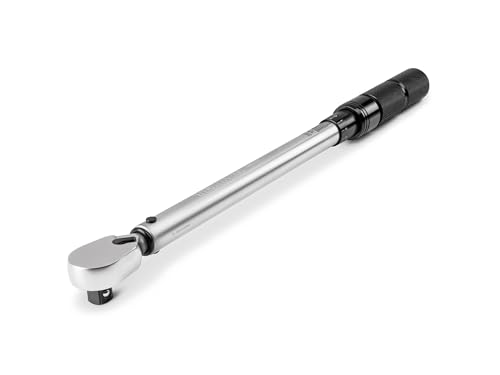
TEKTON TRQ52402 1/2" Micrometer Torque Wrench
Lug nuts, suspension and chassis bolts, with a documented two-direction wrench
- Range
- 40–200 ft-lb
- Type
- Click (micrometer)
- Accuracy
- ±3% CW and CCW
- Rated ±3% clockwise and counter-clockwise
- Serialized certificate, tested at 40, 120 and 200 ft-lb
- 90-tooth ratchet with a 4° swing arc
- Case and a 1/2"-to-3/8" reducer included
- 40 ft-lb minimum is high for smaller fasteners
- No readout or angle mode

CDI 1503MFRMH 1/2" Click Torque Wrench
A US-made, serialized wrench for wheels and suspension in regular use
- Range
- 20–150 ft-lb
- Type
- Click (micrometer)
- Accuracy
- ±4% CW, ±6% CCW (20–100%)
- Made in the USA (City of Industry, California)
- Individually serialized with a NIST-traceable certificate; meets ISO 6789
- Dual scale, calibrated for both directions, in 1 ft-lb steps
- Custom-molded storage case
- 150 ft-lb top end: not for the largest truck and axle fasteners
- Looser rated tolerance on paper than the TEKTON

GEARWRENCH 85087 1/2" Flex-Head Micrometer Torque Wrench
Fasteners you cannot reach squarely, such as suspension bolts tucked behind other parts
- Range
- 30–250 ft-lb
- Type
- Click, flex head
- Accuracy
- ±3% CW (20–100%)
- Head flexes up to 30° to clear obstructions
- Rated ±3% clockwise from 20% to 100% of scale
- 30–250 ft-lb covers wheels through heavy chassis bolts
- A flexed head takes more care to keep the pull square
- 30 ft-lb minimum

Precision Instruments C3FR250F 1/2" Split-Beam Torque Wrench
Switching settings often without winding the wrench down afterwards
- Range
- 40–250 ft-lb
- Type
- Split-beam click
- Accuracy
- ±4% of reading, CW (20–100%)
- Made in the USA
- Sets with fingertip force; no need to wind down after use
- Flex ratchet head, set in 5 ft-lb steps; 19-inch effective length
- Clockwise only
- The maker sells a calibration certificate as an option
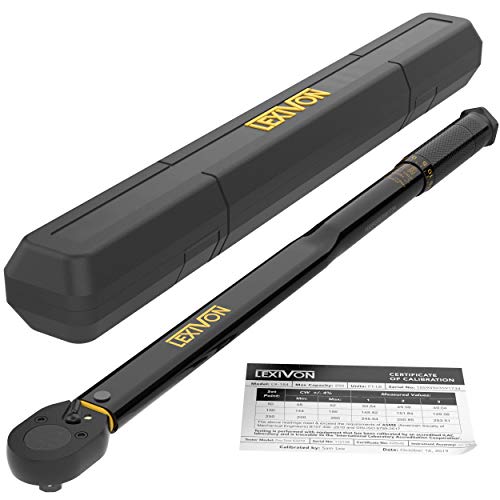
LEXIVON LX-184 1/2" Click Torque Wrench
Wheel swaps and occasional chassis work at a low price
- Range
- 25–250 ft-lb
- Type
- Click (micrometer)
- Accuracy
- ±4%
- Pre-calibrated to ±4%, with a serialized calibration certificate
- Heat-treated chrome-vanadium ratchet head
- High-contrast dual-range scale
- Measures torque clockwise only
- Looser tolerance than the TEKTON
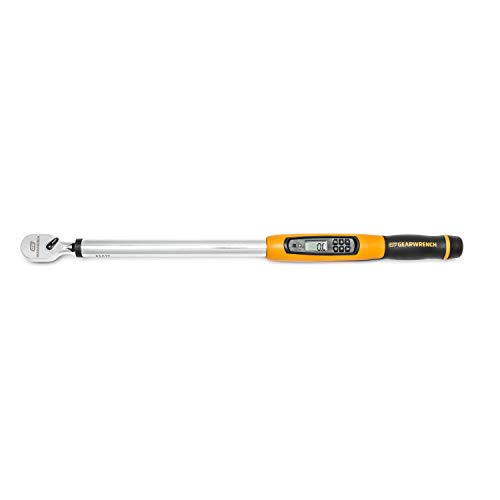
GEARWRENCH 85077 Electronic Torque Wrench
A live readout and target alert on wheels and suspension
- Range
- 25–250 ft-lb
- Type
- Digital
- Accuracy
- ±2% CW (20–100%)
- Audible and LED alert at the target
- Rated ±2% clockwise from 20–100% of range
- Wide 25–250 ft-lb range
- Battery-powered
- More than a simple wheel swap needs
Why you should trust us
Over two decades in aircraft maintenance taught SK Kutubuddin that big fasteners get the same discipline as small ones: the written value, a calibrated wrench, the specified sequence, and a wrench that is checked after it has been dropped or overloaded. Almost two years in a dedicated tool bay, where wrenches are issued, returned and checked for serviceability, shaped what he looks for in a tool that will spend years on wheels and suspension.
We shortlisted 1/2-inch wrenches across the common 150–250 ft-lb classes, then checked every pick's range, rated accuracy, calibration paperwork and features against the manufacturer's specifications and the current retail listing, per our how-we-test method. Where published accuracy figures differ between sources, we quote the more conservative one. This page rests on verified specs and long experience with the category, not a lab test.
Who this is for
This page is for drivers who swap their own wheels and anyone doing brake, suspension or driveline work on cars, SUVs and light trucks. If the job involves lug nuts, control arms, subframe bolts or axle nuts, a 1/2-inch wrench is the right size.
If most of your work is under the hood, a 3/8-inch wrench will serve you better day to day, and many home mechanics end up owning both.
- Seasonal wheel and tire swaps
- Brake, suspension and steering work
- Light-truck and SUV fasteners that need 150 ft-lb or more
- Anyone replacing a torque wrench that has been dropped or used as a breaker bar
How we picked
We picked for the jobs a 1/2-inch wrench actually does, then confirmed every figure against the maker's specifications and the live listing.
Lug nuts in the middle of the scale
Typical car lug-nut values should sit comfortably inside the range, well above the bottom 20% where most wrenches are not rated, and below the very top.
Stated accuracy and direction
We recorded each wrench's rated tolerance and whether it is rated in both directions, and quoted the more conservative figure where sources disagree.
Paperwork you can check against
A serialized calibration certificate with test results is the baseline for every later check, so we noted which picks include one.
Access and handling
Suspension bolts are often hard to reach squarely, so we included a flex-head wrench, and we covered split-beam and digital designs for people who change settings often or want a readout.
What a 1/2-inch torque wrench is for
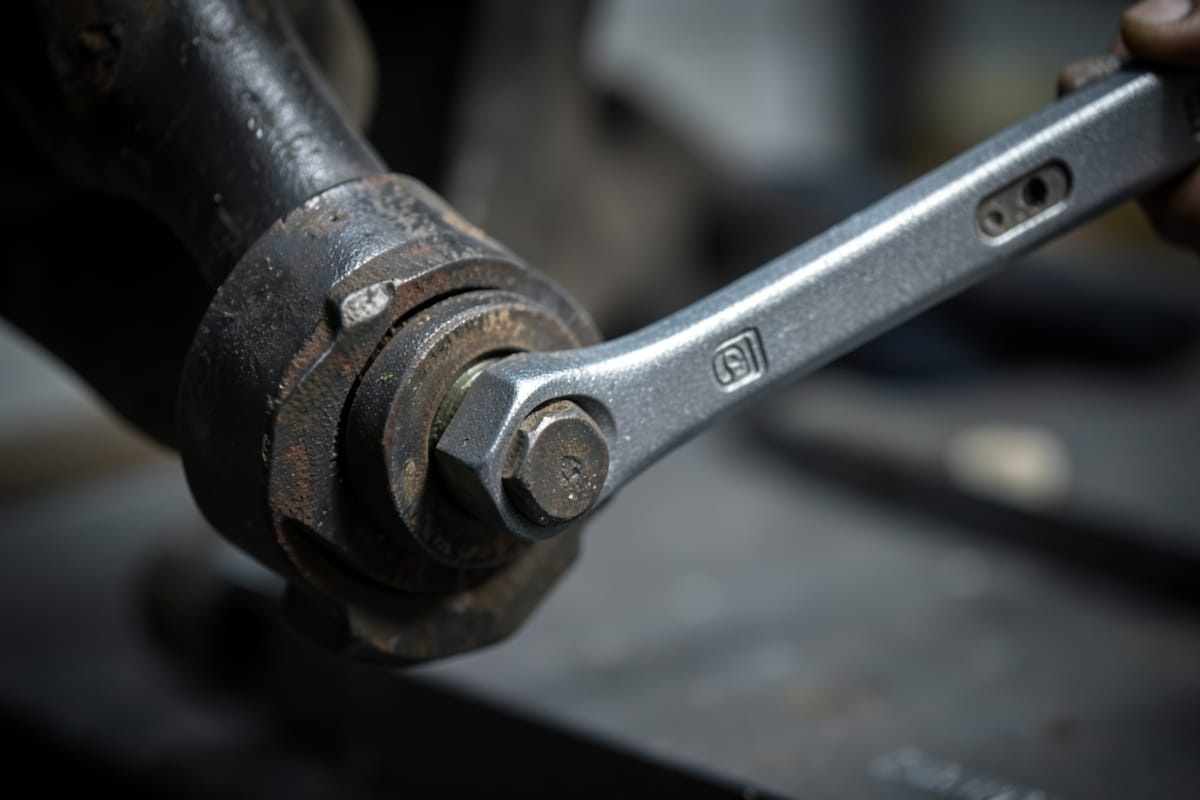
The 1/2-inch drive is the chassis size. It fits the larger sockets lug nuts and suspension bolts take, and its longer handle lets you reach 100–250 ft-lb with a steady pull instead of a strain. Typical jobs are wheels, control arms and ball joints, subframe and crossmember bolts, brake caliper brackets, and axle and hub nuts on many vehicles.
Engine-bay fasteners mostly sit lower, where a 1/2-inch wrench is working near the bottom of its scale. That is 3/8-inch territory, and small covers and bolts belong to an inch-pound wrench.
Choosing the range
Start from the specs you will actually use. Many cars call for lug-nut torque around 80–100 ft-lb, and light trucks and SUVs often more; check your manual. Pick a wrench that puts those values comfortably inside the scale rather than at either end.
Most makers rate accuracy from about 20% of full scale upward, so the bottom of a 1/2-inch wrench's range is its weakest part. A 40–200 ft-lb wrench suits lug nuts well; a 20–150 ft-lb wrench reaches lower for brake and suspension hardware; a 25–250 or 30–250 ft-lb wrench has room for truck and axle fasteners. If you need both ends, two wrenches beat one stretched across everything.
Using a long wrench well
Hold the handle at its grip, not further out, and pull at a right angle to the wrench in one smooth motion until it clicks. Do not jerk it, do not keep pulling after the click, and never use a torque wrench to loosen a tight fastener; that is a job for a breaker bar. After the job, wind a coil-spring click wrench down to its lowest marked setting before you put it away.
Wheels, and why the final pass matters
Most wheel problems blamed on the torque wrench are really process problems. Run the nuts on by hand, snug them in a star pattern with the wheel in the air, then lower the car so the tire takes weight and make the final pass in the same pattern at the vehicle maker's value: one smooth pull and one click per nut.
Impact wrenches are fine for removal, but they can take nuts well past spec in a fraction of a second. If you use one to run nuts down, keep it gentle and always finish with the torque wrench. Re-check the torque after a short drive, especially on new or freshly installed wheels.
When one wrench is not enough
A single 1/2-inch wrench can cover lug nuts and most chassis bolts, but no wrench is equally accurate from its bottom to its top. If your jobs run from small brake bolts to large axle nuts, a 3/8-inch wrench for the low end and a 1/2-inch for the high end will serve you better than one wrench stretched across both.
Before an important job, check the wrench. A digital torque adapter in peak mode will show in minutes whether a click wrench is still close; our calibration guide shows how.
Frequently asked questions
- What is a 1/2 torque wrench used for?
- Wheels and chassis work: lug nuts, suspension and subframe bolts, brake caliper brackets, and axle and hub nuts on many vehicles. Engine-bay fasteners usually call for a 3/8" wrench.
- What range should a 1/2 inch torque wrench be?
- One that puts your common specs well inside the scale. For lug nuts around 80–100 ft-lb, a 40–200 or 20–150 ft-lb wrench works well; for trucks and axle nuts, look at 250 ft-lb models.
- Is a 1/2 torque wrench accurate at low settings?
- Less so. Most makers rate accuracy from about 20% of full scale up, so a 25–250 ft-lb wrench is at its weakest below about 50 ft-lb. Use a 3/8" wrench for lower values.
- Can I use a torque wrench to loosen bolts?
- No. Loosening a tight fastener can overload the mechanism and throw off its calibration. Use a breaker bar or ratchet to loosen, and the torque wrench only for the final tightening.
- Click or digital for a 1/2 inch torque wrench?
- Click is simpler, needs no batteries and is ideal for wheels. Digital adds a live reading and target alerts, which help when you work to many different specs.
- What torque wrench do I need for lug nuts?
- A 1/2" drive click wrench whose range puts your lug-nut spec near the middle, such as 40–200 or 20–150 ft-lb for most cars. Check the value in your owner's manual.
- Is a 1/2 inch torque wrench too big for a car?
- Not for wheels and suspension, which is what it is for. For engine-bay fasteners, most of which sit lower, a 3/8" wrench is the better tool.
- How long should a 1/2 torque wrench be?
- Long enough to reach its maximum with a steady pull. Wrenches rated to 250 ft-lb are generally longer than 150 ft-lb models for that reason, so check that yours fits where you will use it, especially under a vehicle.
Related reading
- Aeronautics diploma
- Engineering degree
- BAMEC (DGCA)
- QC-trained
- ~2 yrs tool management
SK spent over two decades in aircraft maintenance, working hands-on with aero-engine systems and flight data recorder systems, borescope-inspecting turbine and compressor blades, and spending almost two years in a dedicated tool bay. He holds a diploma in mechanical engineering (aeronautics), an associate degree in science, an engineering degree and a Basic Aircraft Maintenance Engineer's Certificate (BAMEC) from DGCA, and has completed quality-control and aviation fuels & lubricants training. GaugeGrade applies the same inspection, torque and tool-management standards to the tools everyday mechanics, DIYers and trades actually buy.