Torque Wrench Extension & Crowfoot Calculator
A crowfoot wrench, a torque adapter or any offset extension moves the fastener away from your torque wrench's square drive. That lengthens (or shortens) the lever arm, so the fastener gets a different torque from the one on the wrench's scale. The calculator below gives you the setting to use instead, and the rest of this page shows how to measure for it.

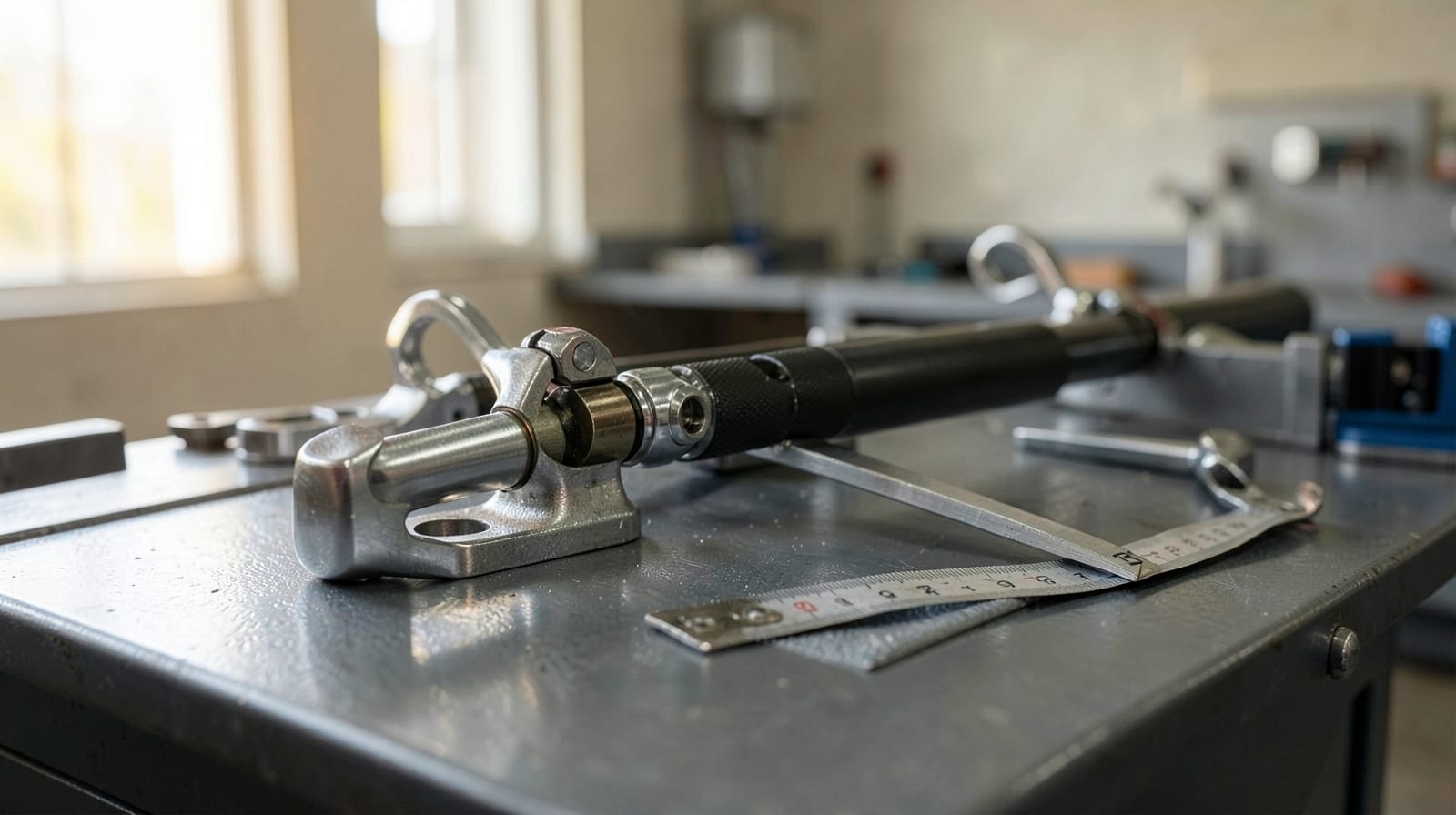
The correction comes from simple leverage. Your wrench's scale assumes the fastener sits at its square drive, but the fastener is now some distance away. If the adapter points straight out along the wrench, the fastener sees more torque than the scale shows; point it back toward the handle and it sees less; turn it square to the wrench and, for practical purposes, the setting does not change.
Straight socket extensions and drive-size adapters are different: they sit in line with the drive, not along the wrench, so they need no correction at all.
Calculator
Torque wrench setting with an adapter
Center of the square drive to the load point on the handle.
Center of the square drive to the center of the fastener.
If you set the wrench to 40.0 ft-lb instead, the fastener would get about 45.0 ft-lb, 12.5% too much.
Formula: setting = target × L ÷ (L + E × cos angle). Assumes you pull square to the wrench at its load point. Check the result against your service data, and round to the nearest mark your wrench can set.
What you’ll need
- See our picks →A torque wrench in the right range
The corrected setting still has to fall in the wrench's useful range.
- A crowfoot wrench or torque adapter
Sized to the fastener or fitting, and fully seated before you pull.
- A tape measure or steel rule
To measure the wrench's effective length and the adapter's length from the center of the square drive.
- The torque specification
The value and its unit from the service data.
How to measure and set up
Find the target torque
Take the value from your service data, in its own unit. The calculator works in any torque unit, as long as you read the setting back in the same unit.
Measure the wrench's effective length (L)
Measure along the wrench from the center of the square drive to the load point, the place on the handle where your hand should apply force. Many wrenches mark it with a line or a ridge; if yours does not, use the center of the grip, and pull there every time.
Measure the adapter length (E)
Measure from the center of the adapter's square drive hole to the center of the fastener. On Capri Tools' 3/8-inch-drive torque adapters it is 2 inches for every size (their 1/2-inch-drive adapters are longer), which is why they are handy for torque work; on most crowfoot wrenches you need to measure each one.
Note which way the adapter points
Straight out, in line with the wrench, adds its full length. Square to the wrench adds almost nothing. Pointing back toward the handle subtracts it. At any other angle, the calculator uses the part of E that lies along the wrench.
Set the wrench and pull at the load point
Set the wrench to the calculated value, rounded to the nearest mark it can set. Keep the adapter fully seated, pull square to the wrench at the load point in one smooth motion, and stop at the click.
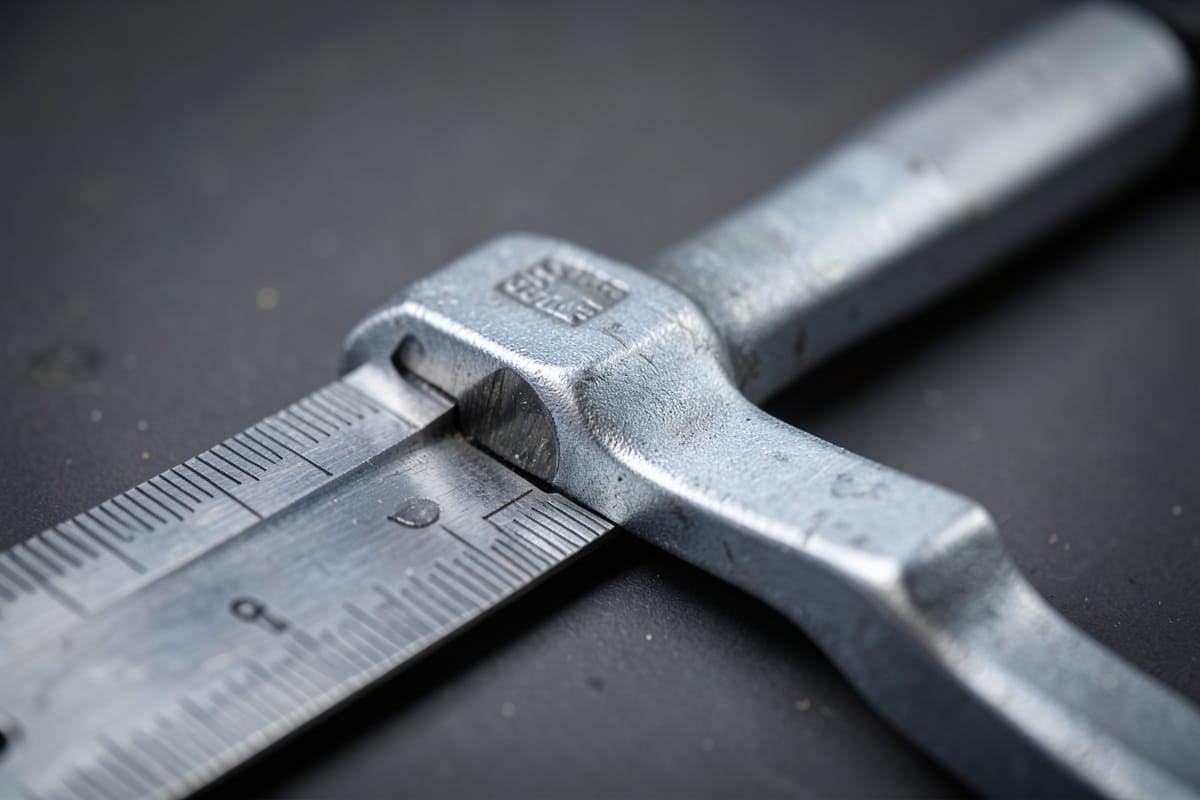
Crowfoot wrenches and torque adapters
Any crowfoot works with the formula once you have measured it. A set with a known, fixed offset makes the arithmetic easier and the result more repeatable.
GaugeGrade is reader-supported. When you buy through links on our site we may earn an affiliate commission at no extra cost to you. We only recommend gear we have researched against verified manufacturer specifications.

Capri Tools 3/8" Drive Torque Adapter Set, SAE (9-Piece)
Torquing fasteners a socket cannot reach without measuring each adapter
- Drive
- 3/8"
- Sizes
- 1/4–3/4 in, 9 pieces
- Offset (E)
- 2 in, center to center
- Every adapter is 2 in from drive center to fastener center, so E is always 2
- 12-point box end grips more of the fastener than an open crowfoot
- Metric 10–19 mm set sold separately
- A box end must slip over the fastener, so it will not fit a line nut with a pipe in the way
- 3/8" drive only

TEKTON 3/8" Drive Flare Nut Crowfoot Wrench Set (13-Piece)
Brake, fuel and hydraulic line fittings that need a torque value
- Drive
- 3/8"
- Sizes
- 5/16–1 in, 13 pieces
- Build
- 4140 chrome-moly, nickel-plated
- Flare-nut opening slips over a line and grips the fitting on more flats than an open end
- Heat-treated 4140 chrome-moly; maker states it exceeds the ASME proof-torque requirement
- Laser-engraved sizes and a storage rack
- Measure each wrench's drive-to-fastener length before you calculate
- SAE sizes only in this set

GEARWRENCH 3/8" Drive Crowfoot Wrench Set, SAE (11-Piece, 81908)
General crowfoot work where height or access is restricted
- Drive
- 3/8"
- Sizes
- 11 pieces, SAE
- Type
- Open end
- Open end slips onto fasteners where a socket will not fit
- Full-polish chrome over alloy steel
- Metric 10-piece set (81909) also available
- Open end grips fewer flats than a flare-nut or box design
- Measure each wrench's offset before you calculate
The formula, with worked examples
Wrench setting = target torque × L ÷ (L + E). This is the in-line case, with the adapter pointing straight out. For any other angle, replace E with E × cos(angle): at 90° the cosine is zero, so the setting equals the target; pointing back (180°) makes the term negative, so the setting rises.
Example 1: a 40 ft-lb target, a wrench with a 16-inch effective length and a crowfoot that adds 2 inches straight out. Setting = 40 × 16 ÷ 18 = 35.6 ft-lb. Set the wrench to 40 instead and the fastener gets 45 ft-lb, 12.5% too much.
Example 2: the same wrench and crowfoot, turned to point back toward the handle. Setting = 40 × 16 ÷ 14 = 45.7 ft-lb.
Example 3: a Capri torque adapter (E = 2 in) on a 3/8-inch wrench with a 14-inch effective length, for a 25 ft-lb spec. Setting = 25 × 14 ÷ 16 = 21.9 ft-lb.
Why the load point matters
A click wrench is calibrated for force applied at its load point. Grip it somewhere else and the torque at the click shifts: on a typical click wrench, whose mechanism sits behind the head, gripping further out gives slightly less torque than the setting and gripping closer in slightly more. That error applies whether you use an adapter or not, so grip the wrench where its maker intends every time.
The adapter formula works because the wrench is calibrated for force at its load point: pull there, square to the wrench, and the setting maps to a known force. Some specialist wrenches with interchangeable heads are designed around a fixed effective length and carry their own instructions; follow the maker's instructions for those.
Common mistakes
Most wrong answers come from the measurements, not the arithmetic:
- Measuring the wrench's overall length instead of its effective length to the load point.
- Measuring the crowfoot's overall length instead of drive center to fastener center.
- Correcting for an adapter that is square to the wrench, where no correction is needed.
- Forgetting that pointing the adapter back toward the handle means the setting must go up, not down.
- Pulling the wrench somewhere other than its load point, which adds its own error.
Why you should trust us
Crowfoot wrenches and torque adapters are everyday tools on aircraft, where fuel, oil and hydraulic line fittings are torqued in places a socket cannot reach. Over two decades of aircraft maintenance, including almost two years in a dedicated tool bay, SK Kutubuddin applied exactly this correction as routine work, and his engineering training is behind the way this page explains the leverage rather than just quoting the formula.
The formula follows standard torque-wrench practice and the correction method set out in our torque-wrench guide. The calculator's arithmetic was checked against the worked examples on this page. Product details for the adapters and crowfoot sets were checked against the manufacturer's listing, per our how-we-test method.
Frequently asked questions
- Do I need to recalculate torque when using a crowfoot?
- Yes, unless the crowfoot is square (90°) to the wrench. Pointing straight out it lengthens the lever arm and the fastener gets more torque than the setting; pointing back it gets less.
- Does a socket extension change torque?
- No. A straight extension sits in line with the square drive, so the torque at the fastener matches the setting. Keep it straight and supported; a universal joint used at an angle can introduce error.
- What is the formula for a torque wrench extension?
- Setting = target × L ÷ (L + E), where L is the wrench's effective length and E is the adapter's length, both measured from the center of the square drive. For other angles, use E × cos(angle).
- Why use a crowfoot at 90 degrees?
- At 90° to the wrench the adapter adds almost nothing to the lever arm, so you can set the wrench to the specified torque without a correction.
- What is the effective length of a torque wrench?
- The distance from the center of the square drive to the load point on the handle, where the wrench is designed to be pulled. Measure it on your own wrench; it varies by model.
- Does the calculator work in newton-meters?
- Yes. The correction is a ratio of lengths, so any torque unit works, as long as the setting is read back in the same unit and both lengths use the same unit.
- Can I use this for a digital torque wrench?
- Yes, as long as you pull at the wrench's load point, square to the handle. Some digital wrenches let you enter an adapter length and apply the correction themselves; if yours does, use one method, not both.
Related reading
- Aeronautics diploma
- Engineering degree
- BAMEC (DGCA)
- QC-trained
- ~2 yrs tool management
SK spent over two decades in aircraft maintenance, working hands-on with aero-engine systems and flight data recorder systems, borescope-inspecting turbine and compressor blades, and spending almost two years in a dedicated tool bay. He holds a diploma in mechanical engineering (aeronautics), an associate degree in science, an engineering degree and a Basic Aircraft Maintenance Engineer's Certificate (BAMEC) from DGCA, and has completed quality-control and aviation fuels & lubricants training. GaugeGrade applies the same inspection, torque and tool-management standards to the tools everyday mechanics, DIYers and trades actually buy.