Borescope vs Endoscope: What's the Difference?
In the tool world, borescope and endoscope mean almost the same thing: an optical probe or camera on the end of a tube or cable that shows you inside something you cannot see into. Borescope is the industrial term; endoscope is the medical one, and it is also the name most cheap USB and WiFi snake cameras are sold under. What matters is not the name but the probe: its diameter, its length, whether it is rigid, flexible or steerable, and how it shows you the image.

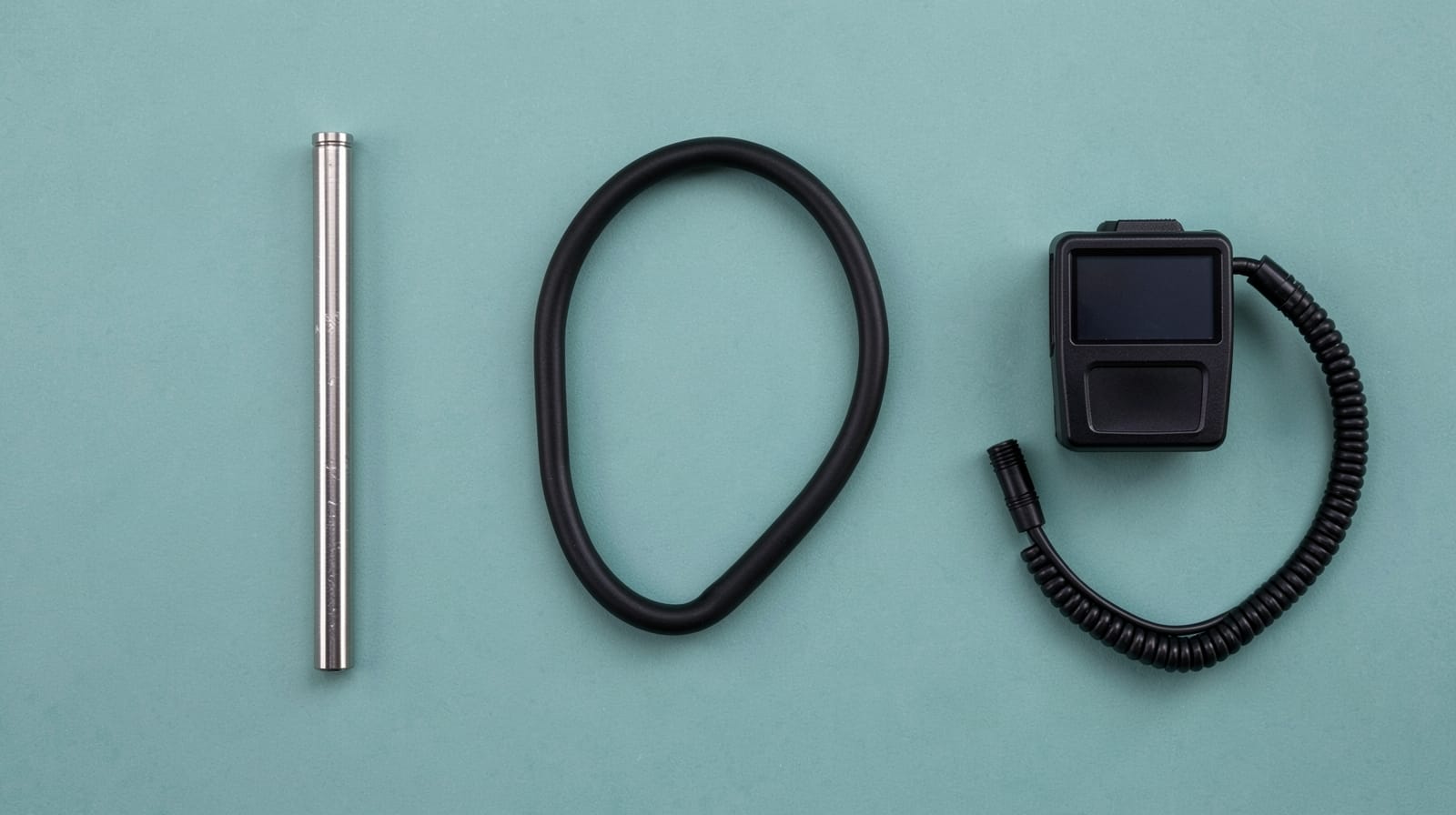
The borescope takes its name from inspecting the bores of guns, and the name stuck in industry for any scope that looks inside machinery: engine cylinders, turbine stages, castings, pipes and welds. Endoscope comes from medicine, where it describes instruments made to look inside the body, and those are regulated medical devices built and cleaned to a very different standard.
When a tool listing says endoscope, inspection camera or snake camera, it is almost always describing the same class of product as a video borescope: a small camera and LEDs at the tip of a semi-rigid or articulating cable, feeding a screen or a phone. Choose it by the job, not by the word in the title.
How to choose the right scope, whatever it is called
Measure the way in
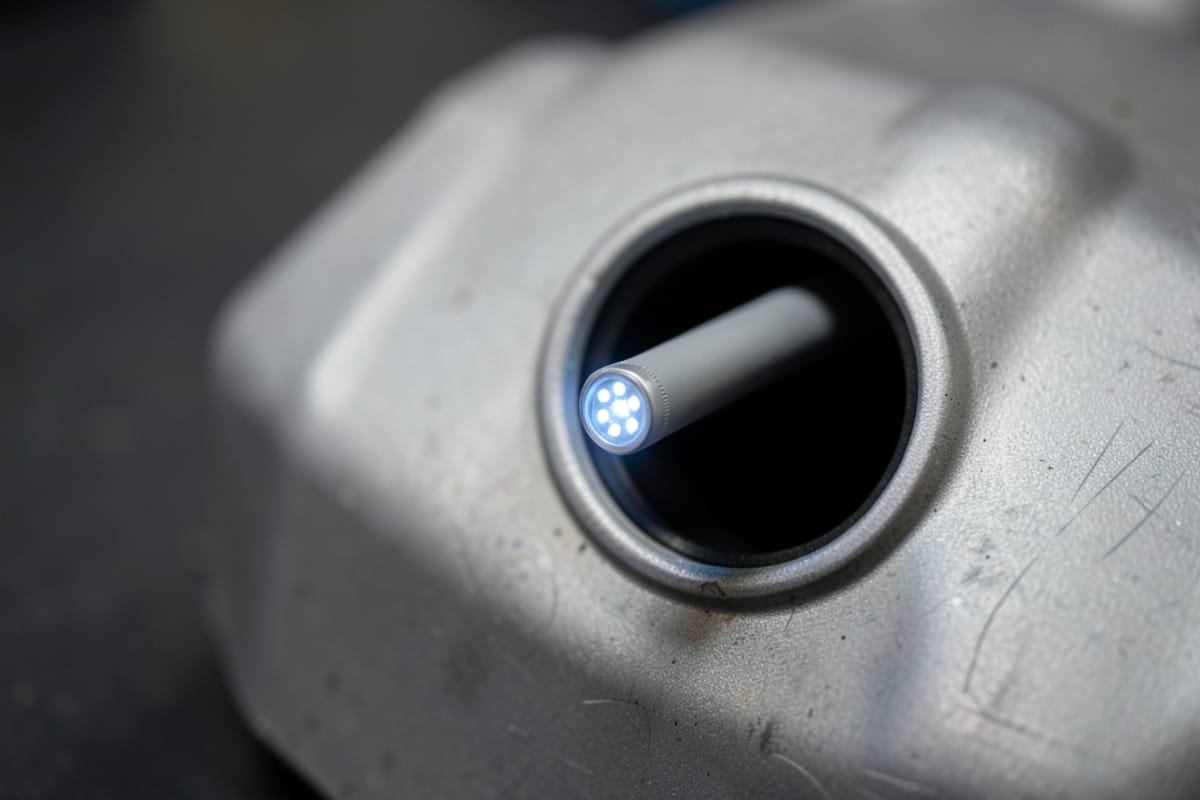
The probe has to fit the access point, with room to angle it once inside. A probe of about 6 mm or less passes most car spark-plug holes comfortably, and 3.9 mm suits smaller plug holes on motorcycles and small engines. An 8 mm-class probe fits a 14 mm plug hole but is tight in a 12 mm one and may not pass a 10 mm one, so it is mainly for engine bays, intakes, walls and drains. Measure the smallest opening you need to enter.
Decide how far you need to reach
Cylinder and engine-bay work needs only a few feet of cable; drains, ducts and walls need much more. A semi-rigid cable holds its shape so you can steer it by bending, while a softer cable follows curves but is harder to aim.
Decide how you need to look
A forward-looking camera shows what is straight ahead. A dual- or triple-lens probe adds side views you switch between, and an articulating probe lets you steer the tip, which matters when the thing you need to see is around a corner, such as a cylinder wall or a valve seat.
Choose how you will see the image
A scope with its own screen is quickest to use and needs no app. A phone scope, over WiFi or a USB-C or Lightning cable, costs less and gives you a bigger screen, with the trade-offs of pairing, battery and, over WiFi, some lag.
Check the lighting, focus and build
Adjustable LEDs matter more than a headline resolution in a dark cavity, and a fixed-focus camera is sharp only within a set distance range. An IP67 probe is sealed against dust and immersion in water; wipe oil and solvents off after use.
Rigid, flexible and video: the three kinds of scope
A rigid borescope is a straight tube with a lens system inside. It gives a very clear image, and side-viewing versions can look off-axis, but it needs a straight path in to the area you are inspecting.
A fiberscope uses a flexible bundle of glass fibers to carry the image from the tip back to an eyepiece or camera, so it can bend around corners. The fibers give the image a faint honeycomb pattern, and a fiber bundle can be damaged by bending it too tightly.
A video borescope, also called a videoscope, puts a tiny camera sensor at the tip and sends the image electronically. Almost every modern inspection camera, from a budget phone scope to a professional articulating unit, is a video borescope.
Medical endoscopes are a different category
A medical endoscope is designed, cleaned and approved for use inside the body. Tool-grade endoscopes and inspection cameras are not. Never use an inspection camera on a person or an animal, whatever the listing calls it: it is not sterile, not built for it, and not approved for it.
What borescope inspection looks like in aviation
Turbine engines are built with borescope ports, small plugged openings that let an inspector reach the compressor and turbine stages without taking the engine apart. The inspector feeds the probe in, turns the engine slowly, by hand or with a turning tool, so each blade passes the lens in turn, and looks at every blade against a defined standard for cracks, nicks, erosion, burning and foreign-object damage, recording what is found.
Home and automotive inspection works the same way on a smaller scale: get the probe to the right place, look at everything systematically rather than at random, and record what you see so you can compare it next time.
Which name to search for
Search both. The same kind of video inspection camera is sold as a borescope, an endoscope, an inspection camera and a snake camera, and the cheapest listings tend to use endoscope. The specifications that matter are the same whatever the title: probe diameter, cable length and stiffness, lens and articulation, how the image is displayed, lighting and the probe's waterproof rating.
Why you should trust us
Borescope inspection was SK Kutubuddin's core daily work for years during over two decades of aircraft maintenance: looking at turbine and compressor blades through borescopes, fiberscopes and video scopes, and judging each finding against a defined standard. That hands-on use of all three kinds of scope is the basis for this page.
The buying advice here matches the probe sizes, display types and features in our borescope reviews, where every pick's specifications were checked against the manufacturer's data and the current listing, per our how-we-test method.
Frequently asked questions
- Is an endoscope the same as a borescope?
- For tools, effectively yes. Both describe a probe camera for looking inside things; borescope is the industrial term and endoscope the medical one that many tool listings also use. Medical endoscopes are a separate, regulated category.
- What is a borescope used for?
- Looking inside engines, turbines, machinery, pipes, walls and castings without taking them apart: cylinder walls and valves, dropped parts, corrosion, weld quality and blockages.
- What is a fiberscope?
- An older type of flexible scope that carries the image through a bundle of glass fibers. Most modern inspection cameras are video borescopes with a camera sensor at the tip instead.
- Is an inspection camera the same as a borescope?
- Usually. Inspection camera is the retail name for what is technically a video borescope: a camera at the tip of a cable feeding a screen or phone.
- Can I use an endoscope camera for my car?
- Yes, that is what most tool endoscopes are sold for. Match the probe diameter to the access point; a probe of about 6 mm or less passes most car spark-plug holes with room to maneuver.
- Is a borescope better than an endoscope?
- Neither is better by name. For tools, the words describe the same kind of camera; judge the product by its probe diameter, cable, articulation and display.
- What do I need to inspect an engine cylinder?
- A probe thin enough to pass the spark-plug hole with room to angle it (about 6 mm or less for most cars) and, ideally, a side view or an articulating tip so you can see the cylinder walls as well as the piston top.
Related reading
- Aeronautics diploma
- Engineering degree
- BAMEC (DGCA)
- QC-trained
- ~2 yrs tool management
SK spent over two decades in aircraft maintenance, working hands-on with aero-engine systems and flight data recorder systems, borescope-inspecting turbine and compressor blades, and spending almost two years in a dedicated tool bay. He holds a diploma in mechanical engineering (aeronautics), an associate degree in science, an engineering degree and a Basic Aircraft Maintenance Engineer's Certificate (BAMEC) from DGCA, and has completed quality-control and aviation fuels & lubricants training. GaugeGrade applies the same inspection, torque and tool-management standards to the tools everyday mechanics, DIYers and trades actually buy.